AI College Essay Lesson Plan for Grades 11-12

It is mid-October and the Common App deadline is two weeks out. A senior ELA teacher pulls up the first five personal statements in the shared drive. Three of them start with a scene-setting first paragraph that sounds pristine — no comma splices, no voice breaks, none of the signature roughness of a real 17-year-old under pressure. You run all three through an AI detector; it flags one as almost certainly human, one as a coin-flip, and one as almost certainly machine-written. Not one of those verdicts tells you what actually happened, and the deadline is not moving. Banning ChatGPT was last year’s answer. This year’s answer is the one most AI-essay advice skips: out-design the lesson so students use AI as a brainstorm partner with their thinking visible and disclosed — not underground.
TL;DR: An AI college essay lesson plan is a 3-day unit (roughly 150 minutes total) that teaches seniors to use AI for brainstorming and feedback gathering — not drafting — and concludes with a written disclosure statement students attach to their submissions. Day 1 maps what AI can and cannot do for a personal statement. Day 2 runs a guardrailed brainstorm session where students prompt AI for memory-jogging questions, not prose. Day 3 is a disclosure-writing workshop and peer review. The unit aligns to Common App honesty expectations, ISTE student standards, and CCSS writing anchor standards for grades 11-12.
Why you can’t ban AI out of the college essay
Banning does not work because the behavior is already happening at scale. According to a July 2024 Education Week report, roughly 1 in 3 college applicants used AI for essay help — and that figure comes from a period before AI tools became the default tab on a teenager’s browser. The number is not going down.
The enforcement tools are no better. Commercial AI detectors produce false positives on ESL writers, students with strong voices, and any student who edited heavily after generation. They also produce false negatives when students prompt in fragments and assemble manually. Telling a student their essay “flagged as mostly AI” when that student genuinely wrote every word is an academic-integrity incident that ends careers. Detectors do not give teachers ground to stand on — they give teachers liability.
What banning actually does is push use underground. A student who knows the rule is “no AI” and uses it anyway has no reason to document, disclose, or think critically about what AI contributed. There is no incentive to develop the judgment that the admissions process is supposed to demonstrate. Contrast that with a student who learned in your class that AI can legitimately help with memory retrieval and brainstorming but cannot replace their voice — and who knows exactly how to write a disclosure statement that admissions offices increasingly respect.
The buy-an-AI-detector approach and the generic Pinterest advice (“have students handwrite a draft first”) treat the symptom. A structured AI college essay lesson plan treats the behavior.
What can students ethically do with AI on a college essay?
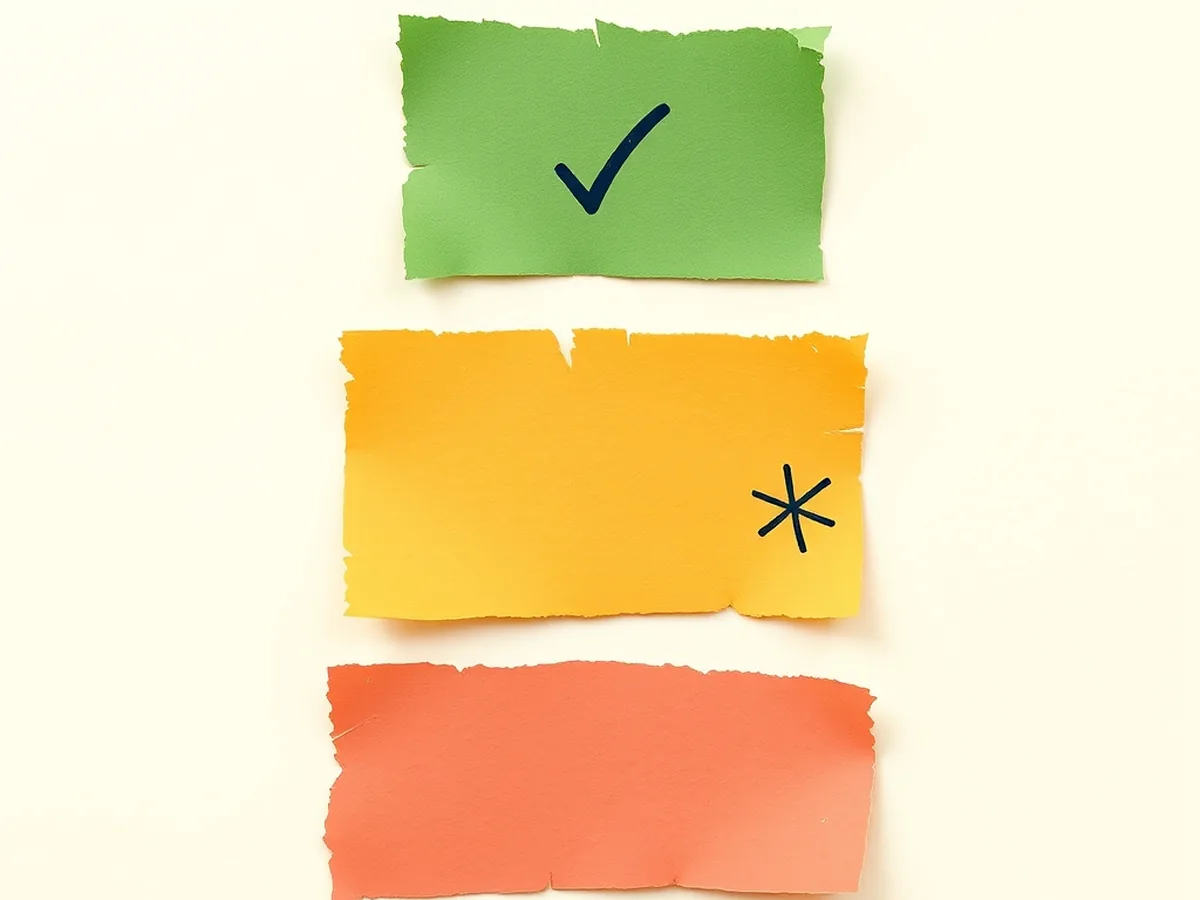
The clearest frame is the tutor test: would a real, human college writing tutor do this for a student? That question — not a blanket rule — is what the decision matrix below teaches seniors to apply.
| AI use | Verdict | Why |
|---|---|---|
| Prompt AI to ask you memory-jogging questions about your topic | Green | Student produces all content; AI acts as interviewer |
| Ask AI for feedback on whether your opening hooks a reader | Green | Student retains full authorship; AI is a mirror, not a pen |
| Use AI to reverse-outline your draft (identify what each paragraph argues) | Green | Analytical tool; the paragraphs are yours |
| Ask AI to rephrase a single awkward sentence and choose the version you prefer | Yellow | Acceptable if disclosed; risks blurring voice at scale |
| Ask AI to generate two possible opening lines you could react to | Yellow | Acceptable as stimulus if disclosed; the final line must be rewritten in student’s voice |
| Ask AI to identify weak spots and suggest structural changes | Yellow | Acceptable with disclosure; stop before AI proposes replacement prose |
| Have AI write the essay from a prompt | Red | AI-generated prose; not the student’s authentic voice per Common App expectations |
| Have AI invent or elaborate on an experience the student didn’t have | Red | Fabrication; violates Common App fraud policy |
| Submit AI-generated text with light editing and no disclosure | Red | Dishonest regardless of detection; misrepresents authorship |
Print this table as a half-sheet on Day 1. Students annotate each row with their own “why” reasoning before discussing as a class. The goal is internalized judgment, not rule memorization.
A 3-day AI college essay lesson plan

Each block assumes a 50-minute period. Adjust timing as needed — if your advisory runs 40 minutes, fold Day 1 and Day 2 brainstorm into a single extended block.
Day 1 — What AI can and cannot do for a personal statement (50 minutes)
| Time | Activity | Notes |
|---|---|---|
| 0–8 min | Bell ringer: students write for 6 minutes on their topic with no tools | Captures authentic voice baseline; collect at end of period |
| 8–18 min | Teach the tutor test and walk through the green/yellow/red matrix | Students annotate rows with their own reasoning |
| 18–28 min | Live demonstration: teacher prompts a neutral AI tool to ask memory-jogging questions about a sample topic | Project the exchange; students see what a guardrailed AI prompt looks like |
| 28–42 min | Students try one green-row interaction on their own topic | Teacher circulates; flag any students prompting for prose (redirect to matrix) |
| 42–50 min | Exit ticket: write one sentence describing how you used AI and one sentence describing what you still have to do yourself | This is the seed of their disclosure statement |
Day 2 — Guardrailed brainstorm session (50 minutes)
| Time | Activity | Notes |
|---|---|---|
| 0–5 min | Return Day 1 exit tickets; students reread their own sentence | Continuity beat — they pick up their own thread |
| 5–20 min | Brainstorm protocol: students write 5 memory-retrieval prompts in the format “Ask me about a time when I ___” and send each to AI | AI responds with follow-up questions; students answer in longhand |
| 20–35 min | Students read AI questions and write raw paragraphs responding to the two or three that surfaced the strongest memories | No AI involved in this writing step |
| 35–45 min | Pair share: each student reads one paragraph aloud; partner identifies “the most specific detail” | Specificity = the voice the AI cannot replicate |
| 45–50 min | Students star the strongest memory detail from today’s session | That detail anchors their opening line next draft |
Day 3 — Disclosure-writing workshop and peer review (50 minutes)
| Time | Activity | Notes |
|---|---|---|
| 0–10 min | Introduce the disclosure statement frame (see Section 4 below); read two sample completed disclosures | Normalize disclosure as a standard professional practice |
| 10–25 min | Students complete their own disclosure statement using the fill-in template | Teacher circulates; prompt students to be specific, not vague (“I used AI” is not sufficient) |
| 25–40 min | Peer review round: partner reads disclosure + reads opening paragraph of the essay; gives one piece of feedback per Common App criterion — authentic voice, genuine experience, honest representation | Cross-reference Common App fraud policy |
| 40–50 min | Class debrief: what felt hardest about writing the disclosure? | Surface the discomfort deliberately — that’s the ethics lesson |
For the full scripted version of this unit — including the Day 1 demonstration script, the brainstorm protocol card, and a standards-documentation sheet — the AI in College Essays Unit — Grade 12 Senior Capstone Pack has all three days ready to print.
Teaching students to write an AI disclosure statement

A disclosure statement is the written record a student attaches to their essay that specifies how AI was used in the process. The Common App’s fraud policy prohibits misrepresentation of authorship — a disclosure statement is how students demonstrate honest authorship even when AI was part of the process.
The template below gives students five sentence-starters to complete. Students turn it in alongside their essay draft on Day 3 and revise it when they revise the essay.
AI Use Disclosure — Personal Statement Draft
- “I used [name the AI tool] to ___________ [describe the specific task, e.g., generate memory-retrieval questions about my experience].”
- “The brainstorming session produced ___________ [describe what you got from it, e.g., 12 follow-up questions], which I answered in handwritten notes.”
- “The ideas, memories, and stories in my essay are ___________ [e.g., entirely my own / drawn from my own experience].”
- “The wording of my final essay ___________ [e.g., was written by me / was revised by me from a rough passage I wrote after the brainstorm].”
- “I did not ask AI to ___________ [e.g., write any section of my essay / invent details about my experience].”
The goal is specificity. A disclosure that says “I used AI to help” is nearly useless — it tells no one what actually happened. A disclosure that says “I used ChatGPT to generate 10 memory-jogging questions about my experience volunteering at the community garden; I answered each question in longhand; no AI prose appears in my essay” is a document that admissions readers, integrity officers, and the student’s own future self can evaluate clearly.
Teaching this habit in a senior writing class also mirrors what professionals in journalism, law, and academic writing are already being asked to do. Students who graduate knowing how to write a disclosure statement have a practical skill that is already appearing in workplace and university contexts.
For pairing this disclosure practice with a broader classroom AI policy for younger grades, see the AI Acceptable Use Agreement companion post for middle school — the disclosure-clause language there translates directly to high school with minor adjustments.
The equity gap most AI-essay advice ignores
Most AI college-essay advice targets the average case: a student with reliable internet access, a free-tier ChatGPT account, and some familiarity with how to prompt. That advice misses the structural problem underneath.
A May 2026 Inside Higher Ed report on AI-written admissions essays found that lower-income and first-generation college applicants relying on free-tier AI tools produced weaker essay outcomes than peers who combined paid tools with human support — tutors, counselors, older siblings who had navigated the process. The AI access gap is not the same as the quality gap: having a tool and knowing how to use it in context are two different things.
This is precisely where a structured AI college essay lesson plan closes the gap that informal advice cannot. When the teacher runs the same guardrailed brainstorm protocol with every student in the room — with the same decision matrix, the same disclosure template, the same peer-review criteria — every student gets the equivalent of a structured coaching session regardless of what they have access to at home.
For AVID teachers and college counselors, this is the differentiator. The students who most need a structured process for using AI ethically and effectively are the students who are least likely to get that process from any source other than a teacher who taught it explicitly. A Pinterest tip sheet does not close that gap. A 3-day unit does.
The AI College Application Workshop, Grades 11-12 (Essay Ethics + Disclosure) includes an equity-framing discussion card specifically for AVID and college-access contexts, designed to surface the “who has access to what” conversation that the decision matrix alone does not address.
Standards this lesson hits
Every activity maps to at least one named standard. The crosswalk below uses verbatim anchor codes — ISTE 1.2.b, ISTE 1.6.b, ISTE 1.3.b, AI4K12 Big Idea #5, and CCSS.ELA-LITERACY.W.11-12.5 — so a department chair can file it as-is.
| Activity | Standard | What it proves |
|---|---|---|
| Decision matrix annotation + tutor-test discussion | ISTE 1.2.b — engage in positive, safe, legal, and ethical behavior when using technology | Students demonstrate they can evaluate AI use against an ethical framework, not just a rule |
| Brainstorm session using AI for memory-retrieval questions only | ISTE 1.6.b — create original works or responsibly repurpose digital resources | Students maintain authentic authorship while using AI as a creative stimulus |
| Evaluating AI-generated follow-up questions for relevance and usefulness | ISTE 1.3.b — evaluate the accuracy, perspective, credibility, and relevance of information | Students exercise critical judgment about which AI questions are worth pursuing |
| Equity discussion: who benefits from AI tools, who gets left out | AI4K12 Big Idea #5 — Societal Impact | Students connect individual tool use to systemic access and fairness questions |
| Brainstorm → draft → disclosure revision workflow | CCSS.ELA-LITERACY.W.11-12.5 — develop and strengthen writing by planning, revising, and editing | Students use AI as a planning tool, then revise and edit independently |
| Using AI deliberately for a defined subtask; documenting that use | CCSS.ELA-LITERACY.W.11-12.6 — use technology to produce, publish, and update writing | Students demonstrate intentional, documented use rather than undifferentiated AI reliance |
Standards source: ISTE Student Standards. ISTE is a registered trademark of the International Society for Technology in Education. This resource is not affiliated with or endorsed by ISTE. AI4K12 is an initiative of CSTA and AAAI.
For the full standards-documentation sheet your admin or department chair can file — crosswalk formatted as a portfolio artifact — the Grade 12 AI Literacy Complete Pack (College Essays + Capstone + CRAFT Bundle) includes the standards sheet along with all three units in one download.
For the upstream skill that makes this lesson land — teaching students to write deliberate prompts so the brainstorm session actually produces useful questions — see how to teach AI prompting to high school students. That post covers the 5-day prompt progression that pairs directly with Day 2 of this unit. And when you are ready to build out the broader AI literacy sequence for grades 11-12, the full catalog is at /shop.
This post was drafted with AI assistance and human-finalized.
Quick questions
Yes, with boundaries. The Common App prohibits misrepresentation of authorship, not AI use itself. Students can use AI ethically for brainstorming, memory-retrieval questions, and feedback — as long as all ideas and wording are their own and the use is disclosed. A structured classroom lesson teaches them exactly where that line falls.
An AI disclosure statement is a short written record — typically three to five sentences — that a student attaches to a draft specifying which AI tool was used, what task it performed, and confirming that all ideas and wording in the final essay are the student's own. Specificity is what makes it useful: 'I used AI to generate memory-jogging questions; I answered them in longhand; no AI prose appears in my essay' is a disclosure, while 'I used AI to help' is not.
Get the free AI-Proof Assignment Toolkit
10 ways to redesign any assignment so an AI chatbot structurally can't do it — plus a redesign worksheet, a 45-minute lesson, the “Spot AI Work” card, and parent templates. One email, all 5 pieces.
Prefer the full breakdown? See everything inside the toolkit →