AI in Economics Lesson for Middle School: Markets & Pricing

A student mentions that a rideshare home cost her $12 on Tuesday and $27 on Friday for the same trip — and asks why. The honest answer is that no person set either price; an algorithm did, reading demand second by second. Most middle school economics units still teach supply and demand with lemonade stands, never mentioning that the biggest markets students actually use now run on AI. That gap isn’t a sign you’re behind on technology. Markets went algorithmic while the curriculum kept its old examples — and closing that gap is a normal literacy update, not a tech overhaul.
TL;DR. To teach AI in a middle school economics lesson, anchor it to three market mechanisms students already feel: algorithmic pricing (surge and dynamic pricing), AI recommendation engines that shape demand, and automation reshaping the job market. Run a 45-minute unplugged “You Set the Price” simulation where student groups act as the pricing algorithm, then debrief on fairness. It maps to C3 economics, ISTE 1.3.d, CCSS.ELA-LITERACY.SL.7.1, and AI4K12 Big Idea #5 — no devices required.
Why AI belongs in your middle school economics unit
The curriculum you’re working from already covers supply and demand, price signals, and market behavior. AI didn’t add a new economics topic — it changed how the existing ones work. Standard C3 D2.Eco.4.6-8 asks students to “explain how changes in supply and demand cause changes in prices and quantities in markets.” That standard was written for lemonade stands and farmers’ markets. Today’s prices in rideshare, airlines, concert tickets, and online retail are set by algorithms reading demand signals in real time, thousands of times a day. Teaching an AI in economics lesson for middle school is not a technology detour — it’s applying the same supply-and-demand lens to the markets students already live inside.
The gap isn’t about being behind on AI. The curriculum was simply written before algorithmic pricing became infrastructure. Closing it means updating one of the units you already teach, not building a new one from scratch.
How does AI change prices? Start with surge pricing
Here is where the concept clicks. A student requests a rideshare on a Friday night during a rainstorm. Her friend, standing next to her, opens the same app two minutes later and sees a fare that is $18 lower. Neither student did anything different. The algorithm did.
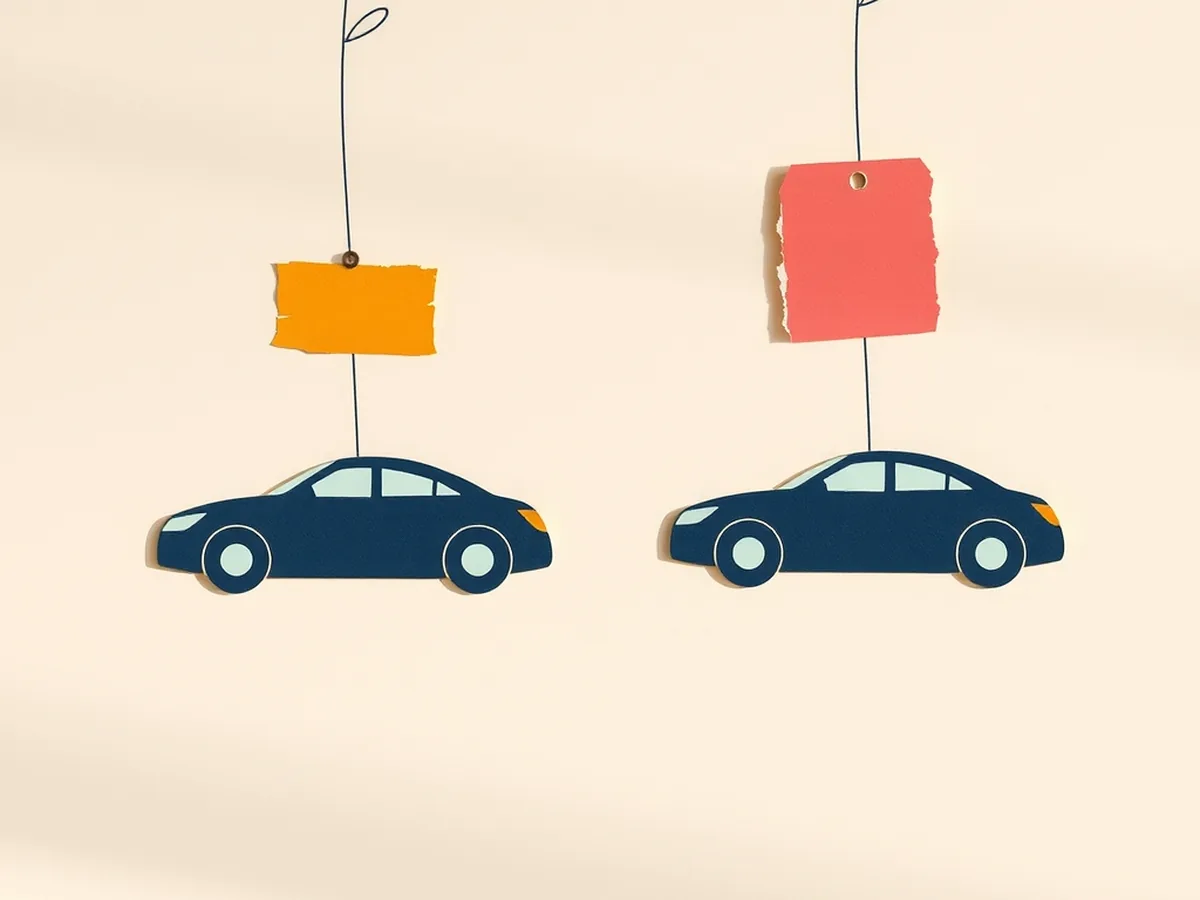
A Consumer Reports investigation of 30 U.S. rideshare routes found a 42.4% median price spread between the lowest and highest fares for the same ride requested seconds apart. On one Kansas City route, the identical trip ranged from about $31 to $65 — more than double — within the same time window (Consumer Reports, “Uber and Lyft charge different prices for the same ride”). The mechanism is textbook supply and demand: the algorithm reads real-time signals — driver locations, ride requests, local events, weather — and raises the price when demand outpaces supply. The economic principle hasn’t changed. The speed and opacity of execution have.
This is the dynamic pricing lesson for students that the standard curriculum skips. When students understand that an algorithm is running the supply-demand calculation, not a human manager, they can ask the follow-up question that matters: who decides what signals the algorithm counts, and who gets priced out when the formula runs?
How AI shapes what students want to buy
Price isn’t the only market lever. AI also shapes which products students encounter in the first place — and therefore what they want.

Netflix has reported that its recommendation system drives approximately 80% of what people watch on the platform (LitsLink, “All About Netflix Artificial Intelligence”). The same architecture runs in every streaming service, most e-commerce sites, and the social feeds students use daily. The economic implication is straightforward but rarely named in middle school class: AI doesn’t just serve existing demand, it shapes it. A student who sees a product recommended by an algorithm isn’t expressing a pre-formed preference — she’s responding to a calculated nudge.
For a deeper look at the feed mechanics underneath those nudges — how platforms decide which content rises to the top — the post on how recommendation feeds work runs the Signal → Score → Serve → Repeat loop as a classroom card simulation. Pairing that with the economics framing here gives students the full picture: the algorithm shapes demand and responds to it at the same time.
AI, automation, and the job market
Keep this section brief — the full career-readiness arc lives in a dedicated post — but the connection is too important to skip. The World Economic Forum’s Future of Jobs Report 2025 projects approximately 92 million jobs displaced and 170 million new roles created by 2030, a net gain of roughly 78 million positions, with 39% of current core skill requirements expected to change in that window (WEF Future of Jobs Report 2025).
The discussion question for an economics class isn’t “will jobs disappear?” — it’s “which jobs change, which new ones appear, and what does that mean for what students learn now?” That reframe moves the conversation from anxiety to labor-market analysis, which is exactly where C3 economics belongs. For the full labor-market and career-readiness unit, see the post on AI career readiness for high school.
The 45-minute lesson: a “You Set the Price” simulation
This is the section worth printing. The simulation runs unplugged — no devices required — and produces a genuine economic argument from every student in the room.

Minute-by-minute pacing
- 0–5 min — Hook. Project the rideshare price-spread finding (a 42.4% median gap, same route, seconds apart). Ask: how is that possible? Take three or four student responses. Do not explain yet.
- 5–15 min — Mini-lesson: how algorithmic pricing works. Whiteboard three inputs the algorithm reads — available supply (drivers nearby), real-time demand (how many people are requesting rides), and contextual signals (weather, events, time of day). Map each input to C3 vocabulary: supply, demand, price signal. The algorithm is doing what the supply-and-demand model predicts — it just does it faster than any human can.
- 15–35 min — Simulation. Each small group receives a Demand Card (see the worked example below) and plays the role of the algorithm: they set a price and write a one-sentence justification using the words supply, demand, or both. Run three rounds with three different Demand Cards — one normal, one high-demand, one with a fairness wrinkle.
- 35–45 min — Debrief. Groups share prices and justifications. Whole-class question: when the algorithm charges more during a rainstorm, is that fair? Who benefits, who doesn’t?
Worked example: one Demand Card in action
Demand Card — “Sudden Rainstorm”: It is 6 p.m. on a Tuesday. An unexpected rainstorm hits downtown. 40 people open the rideshare app at the same time. 5 drivers are currently available.
A 7th-grade group might set the price at $24 (up from a baseline $14) and justify it: “Supply is 5 drivers, demand is 40 riders, so price goes up.” A second group sets $35 and adds: “We raised it more because drivers need a reason to come out in the rain — a higher price brings more supply.” The debrief question lands hard: the person who can’t afford the surge price still needs a ride home in the rain — is the market solving a problem or creating one? That argument — price signal versus equity outcome — is the economic literacy move this lesson is after.
Standards crosswalk
| Activity step | Standard | What it asks |
|---|---|---|
| Hook + Demand-Card setup | C3 D2.Eco.4.6-8 | Explain how changes in supply and demand cause changes in prices |
| Mini-lesson + algorithm explainer | ISTE 1.3.d | Build knowledge by actively exploring real-world issues and pursuing active investigation |
| Simulation + price-justification writing | CCSS.ELA-LITERACY.SL.7.1 | Engage in collaborative discussion with diverse partners, building on others’ ideas |
| Debrief — fairness and equity framing | AI4K12 Big Idea #5 | Societal Impact — AI affects society in both intended and unintended ways |
Grab the ready-made lesson
The gap here isn’t that you haven’t been paying attention to AI — it’s that markets went algorithmic while the curriculum was written for a different era. Closing that gap is a one-period move, not a semester renovation.
The AI in Economics Lesson: Markets, Decisions, Automation (Grades 6-8) includes the full “You Set the Price” simulation with all three Demand Cards, the algorithm explainer slides, the debrief discussion protocol, a standards documentation page, and an answer key. It runs in one 45-minute period with no devices required.
If you want the broader social-studies arc — economics, civics, and history in one cohesive unit — the MS AI Social Studies Bundle pairs the economics lesson with the civics and history units at a discount. Both are PDFs ready to print Monday.
This post was drafted with AI assistance and human-finalized.
Quick questions
Anchor AI to a topic your economics unit already covers: supply, demand, and price. Show students that rideshare, airline, and streaming prices are now set by algorithms reading demand in real time, then run a short unplugged simulation where student groups act as the pricing algorithm and justify their price with supply-and-demand vocabulary. You are not adding a new unit — you are updating the examples in one you already teach.
Rideshare surge pricing is the clearest one. A Consumer Reports investigation of 30 U.S. routes found a 42.4% median price gap between the lowest and highest fares for the same ride requested seconds apart. Same trip, same minute, different price — because an algorithm, not a person, raised the fare when it read high demand and low driver supply.
Get the free AI-Proof Assignment Toolkit
10 ways to redesign any assignment so an AI chatbot structurally can't do it — plus a redesign worksheet, a 45-minute lesson, the “Spot AI Work” card, and parent templates. One email, all 5 pieces.
Prefer the full breakdown? See everything inside the toolkit →