AI in Sports Lesson Plan for Middle School: How It Works
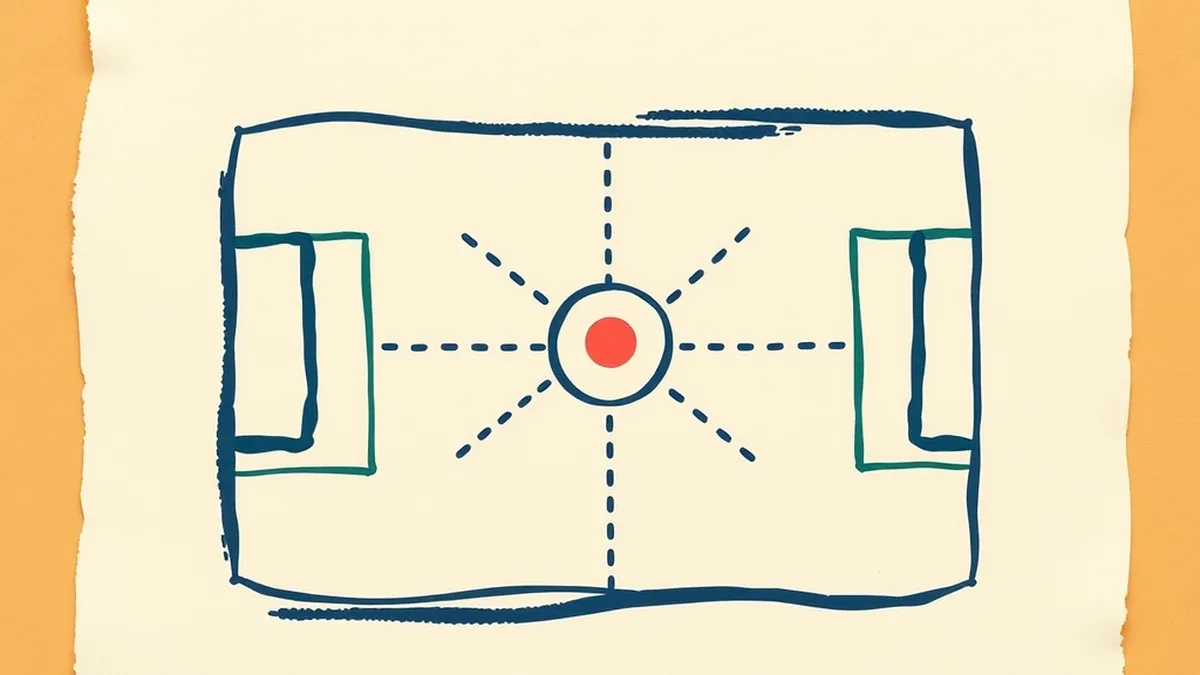
It happens on a Monday. A student drops into their seat, still buzzing from the weekend, and within thirty seconds of warm-up they are asking about the screen the referee consulted before awarding the goal — the one that drew the little dotted line under the ball. “Is that an AI thing?” Yes, it is. And the honest answer to what follows — how it works, when it fails, and whether it can be wrong — is a full unit’s worth of content that nobody handed you when they added “teach AI literacy” to your plate. Sports turns out to be one of the most direct doorways into how AI actually operates: sensors, patterns, predictions, and limits. This post gives you a concrete lesson plan to walk through that door.
TL;DR: AI in sports — computer vision, GPS vests, player tracking systems — uses a four-step pipeline: collect sensor data, find objects in the frame, follow them across frames, then make a call or prediction. Teachers in grades 6-8 STEM, tech, health, or PE can use that pipeline as the backbone of a 45-minute no-device lesson that hits AI4K12 Big Ideas, ISTE Student Standards, and CCSS ELA anchor standards at once. The lesson requires zero technology beyond a whiteboard and paper.
How does AI actually work in sports?

AI in sports follows a four-step pipeline, and every system from Hawk-Eye to a GPS training vest runs some version of it. Walk students through these four words and the rest of the unit clicks into place.
Capture. Cameras, microphones, and wearable sensors collect raw data — pixel grids, GPS coordinates, accelerometer readings — at high frequency. Multiple cameras film the same moment from different angles. This maps directly to AI4K12 Big Idea #1 (Perception): machines perceive the world through sensors, not senses.
Detect. The model processes each frame and finds the objects that matter — the ball, the player, the foot. Detection is a classification task: “is this region of pixels a ball, yes or no?” The model was trained on thousands of labeled examples of balls in frames.
Track. Once detected in frame one, the object is followed across subsequent frames. Tracking answers: “Is the ball in frame 47 the same ball from frame 46, and where did it move?” With multiple camera angles, the system triangulates a three-dimensional position.
Decide. The system makes a call or a prediction: the ball crossed the line, the player covered 9.2 km, the acceleration spike indicates potential overtraining. This is where the output becomes visible — the dotted line on the ref’s screen.
Four steps. Every AI sports system a student can name runs some version of them.
Real examples of AI in sports your students already know
Students arrive with more prior exposure to AI-in-sports than they realize. These examples are in conversations they have had, games they have watched, and leagues they follow.
| System | Sport | What it does | How the AI works |
|---|---|---|---|
| Hawk-Eye (officiating) | Tennis / soccer goal-line | Calls whether the ball is in/out or crossed the goal line | Computer vision from multiple synced cameras triangulates ball position; average error in tennis is approximately 3.6 mm, below the ITF-permitted 5 mm threshold. Hawk-Eye has been used in more than 32,000 matches. |
| Hawk-Eye / optical tracking | NBA basketball | Tracks all players and the ball throughout a game | As of the 2023-24 season, the NBA uses Sony’s Hawk-Eye optical tracking system, with multiple cameras per arena recording full-court movement data to generate player tracking statistics. |
| STATSports GPS vest | Soccer (training + match) | Measures distance covered, speed, and acceleration in real time | An accelerometer and GPS receiver in the vest log movement data each second. US Soccer distributed 6,500 APEX vests to its development programs in what Front Office Sports called the world’s largest such wearable partnership. |
| VAR (Video Assistant Referee) | Soccer officiating | Reviews offside decisions and fouls | Synced camera feeds from multiple angles, combined with human review — a semi-automated system, not fully autonomous. |
The table is worth projecting as-is in class. Ask students: “Which one surprised you?” Then ask: “Which step in the Capture → Detect → Track → Decide pipeline does each one stop at?”
Where AI gets sports calls wrong
This is the question most resources skip — and it is the one that makes the lesson honest.
VAR is the clearest example of a system that does what it was designed to do and still frustrates everyone in the stadium. One analysis of the 2025-26 Premier League season found that the average VAR review delay ran approximately 4 minutes 12 seconds — the slowest of Europe’s top five leagues, compared to roughly 1 minute 55 seconds in France’s Ligue 1. The system is not broken; multi-camera synchronization and human confirmation genuinely take time. But the design did not account for how that time feels when you are standing in the rain watching a referee stare at a screen.
Training-data bias is the deeper problem. Researchers have noted — including a Harvard Science Review analysis of AI fairness in sports — that models trained primarily on Division I college-athlete movement data can perform less reliably when applied to younger or junior athletes whose movement signatures differ from the training distribution. A model learns only from the data it was shown. If that data skews toward one body type, age bracket, or playing style, the model’s blind spots reflect that skew. This is AI4K12 Big Idea #3 (Learning: computers learn from data, so the data shapes the output) and Big Idea #5 (Societal Impact: AI affects society in ways that are not always evenly distributed).
This is also the moment to name the real situation clearly. If you are a STEM or tech teacher who was handed “incorporate AI literacy” with no supporting curriculum, the gap between “AI is in sports” and “here is a lesson that helps students think critically about it” is not a you-problem — it is a materials problem. That gap is what the lesson below addresses.
A 45-minute no-device AI-in-sports lesson
This lesson requires a whiteboard, blank paper, and students willing to stand up. No devices, no subscriptions, no lab sign-up.
| Time | What happens | Teacher move |
|---|---|---|
| 0:00 – 5:00 | Hook: show or describe a Hawk-Eye moment (a goal-line call, a Hawk-Eye tennis challenge). Ask the class: “How did it know?” Collect guesses on the board without correcting any of them yet. | Write every guess, even wrong ones. Label the column “Before.” |
| 5:00 – 15:00 | Teach the Capture → Detect → Track → Decide pipeline on the board. Revisit the guesses: which step did students intuitively describe? Which steps were missing? | One word per step; one sentence each. Draw arrows between steps. |
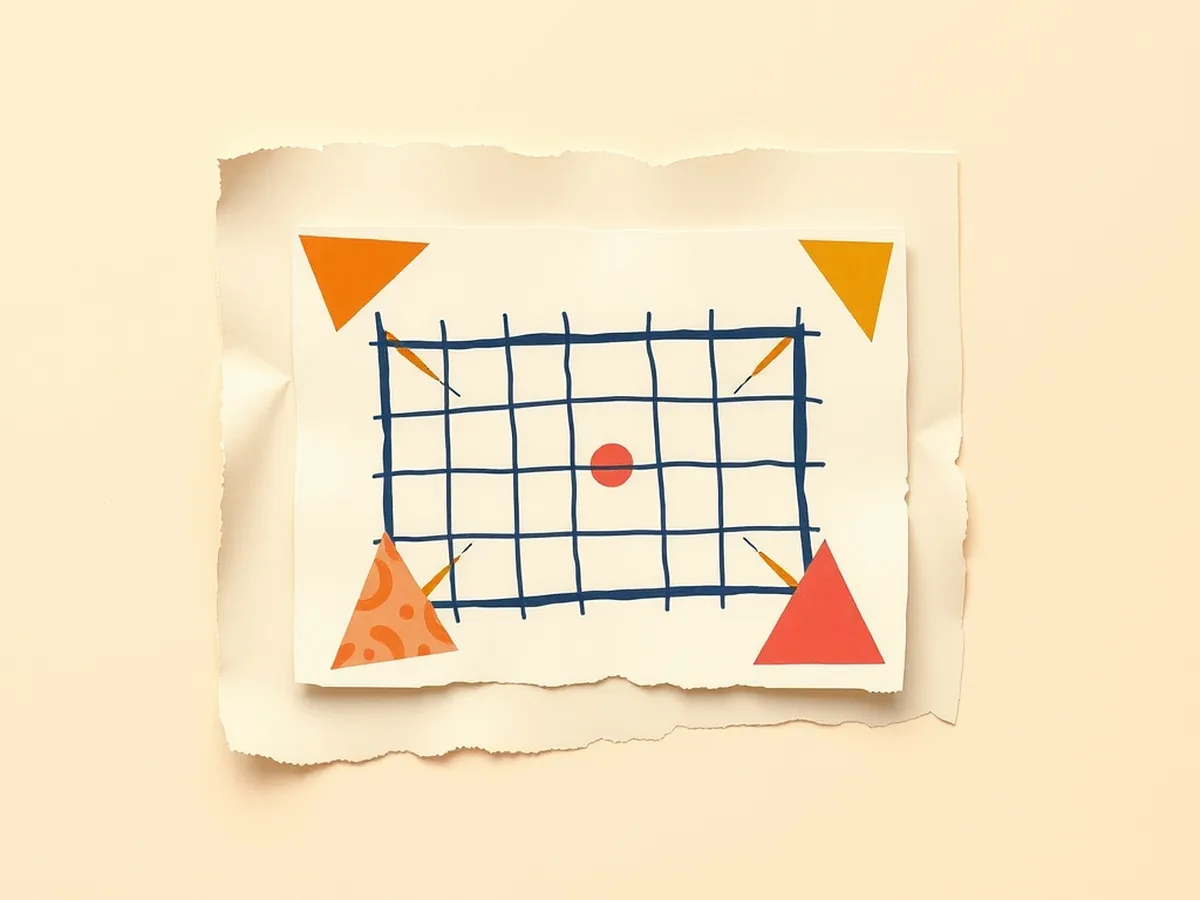
| 15:00 – 30:00 | ”Be the Tracking Camera” role-play. A small paper square is the “ball.” Three to four students stand at fixed positions around a paper “field” on a desk or the floor. A fifth student moves the paper ball slowly across the field in eight steps. At each step, every “camera” student writes the ball’s grid position on their own sheet using a simple A-B-C / 1-2-3 grid. At the end, the class combines their sheets to reconstruct the full path — this models how multi-camera triangulation actually works. No devices required. When you run this, a typical class figures out the reconstruction faster than expected; the harder moment is explaining why they needed more than one camera. That discussion is the learning. | Assign grid axes before the activity starts. Let students discover that a single camera loses the ball when it moves to one side of the field. |
| 30:00 – 40:00 | ”Where it fails” discussion. Present the VAR delay data and the training-bias finding. Ask: Who is affected when the model performs less well for younger athletes? Who made the decision about what data to train it on? | Use the guesses from the “Before” column to surface assumptions students are now ready to revise. |
| 40:00 – 45:00 | Exit ticket: students write one sentence answering “What is one thing AI in sports gets right, and one thing it gets wrong?” in their own words. | Collect. Doubles as formative writing data for ELA crossover. |
This lesson hits ISTE 1.3.d (students build knowledge by actively exploring a real-world issue) and ISTE 1.5.c (students break a problem into parts, extract key information, and build a model). The role-play is the ISTE 1.5.c artifact: students decompose multi-camera tracking into parts, isolate each camera’s data, then reassemble it. For the broader ISTE standards crosswalk for grades 6-8 AI literacy, see the companion post.
Standards crosswalk: ISTE, CCSS, AI4K12
Print this table for your principal walk-through or curriculum night documentation. Every code below is exact — no invented anchors.
| Lesson step | Standard | What it covers |
|---|---|---|
| Capture → Decide pipeline explainer | AI4K12 Big Idea #1 (Perception) | Machines perceive the world through sensors; students identify which sensor type each system uses |
| ”Be the Tracking Camera” role-play | ISTE 1.5.c | Students break the tracking problem into discrete camera-view parts, extract position data, build a combined model of ball movement |
| ”Be the Tracking Camera” role-play | ISTE 1.3.d | Students build knowledge by actively exploring a real-world AI problem through a physical model |
| ”Where it fails” discussion | AI4K12 Big Idea #3 (Learning) | Computers learn from data; biased training data produces biased results |
| ”Where it fails” discussion | AI4K12 Big Idea #5 (Societal Impact) | AI affects society positively and negatively; students identify who bears the cost of underperformance |
| ”Where it fails” discussion | ISTE 1.2.b | Students engage in positive, safe, legal, and ethical behavior when discussing data and AI systems |
| Exit-ticket writing | CCSS.ELA-LITERACY.W.7.8 | Students gather relevant information and assess the credibility of sources (applied to the VAR and bias claims discussed) |
| “Where it fails” discussion | CCSS.ELA-LITERACY.SL.7.1 | Students engage in collaborative discussion, building on others’ ideas and expressing their own clearly |
For a deeper look at how ISTE 1.3.d and ISTE 1.5.c stack with CCSS anchors across a full unit, the ISTE AI standards middle school activities post maps each strand to a specific activity type.
Ready-made resources if you want to extend beyond one class period
The 45-minute lesson above is a one-session entry point. If the sports hook lands and you want to build a fuller AI literacy unit — covering how machine learning generalizes across domains, not just sports — these resources extend the arc directly.
The How AI Works MEGA 16-lesson bundle covers the Capture → Detect → Track → Decide pipeline in detail across multiple real-world contexts, with student handouts and teacher notes. It is the structured version of what this post introduces as a single session.
For teachers who want to zoom in on the “narrow AI doing one specific task very well” concept — which is exactly what Hawk-Eye is — the Types of AI Deep Dive lesson gives students the vocabulary to distinguish narrow AI from more general systems, with grade 6-8 reading level throughout.
And if the no-device angle in this post matches your classroom reality — no carts, no reliable Wi-Fi, or you just want a lesson that does not depend on anything powered — the Unplugged AI Activities bundle has ten no-tech lessons including card sorts and role-plays. The “Be the Tracking Camera” activity in this post is the same pedagogical pattern as several in that bundle.
You were not handed an AI-in-sports lesson plan when you were handed “teach AI literacy.” That is not a gap in your preparation — it is a gap in what curriculum teams have produced for this topic. The post above gives you the one-day version. The resources above give you the unit.
This post was drafted with AI assistance and human-finalized.
Quick questions
AI in sports follows a four-step pipeline: cameras and wearable sensors capture data, a model detects objects like the ball or player, tracks them across frames, then makes a call or a prediction. Real systems include Hawk-Eye for line calls, optical player tracking in the NBA, and GPS vests like STATSports.
Yes. The 45-minute unplugged lesson in this post needs only a whiteboard and paper. Students role-play as fixed tracking cameras around a paper field and combine their notes to reconstruct a ball's path, modeling how multi-camera triangulation works with no technology required.
Hawk-Eye calls whether a ball is in or out using computer vision from synced cameras. NBA arenas use optical tracking to follow every player and the ball. GPS vests like STATSports measure distance, speed, and acceleration. VAR reviews soccer decisions using multiple camera angles plus human review.
Get the free AI-Proof Assignment Toolkit
10 ways to redesign any assignment so an AI chatbot structurally can't do it — plus a redesign worksheet, a 45-minute lesson, the “Spot AI Work” card, and parent templates. One email, all 5 pieces.
Prefer the full breakdown? See everything inside the toolkit →