How Noise-Cancelling Headphones Work: A No-Device Lesson
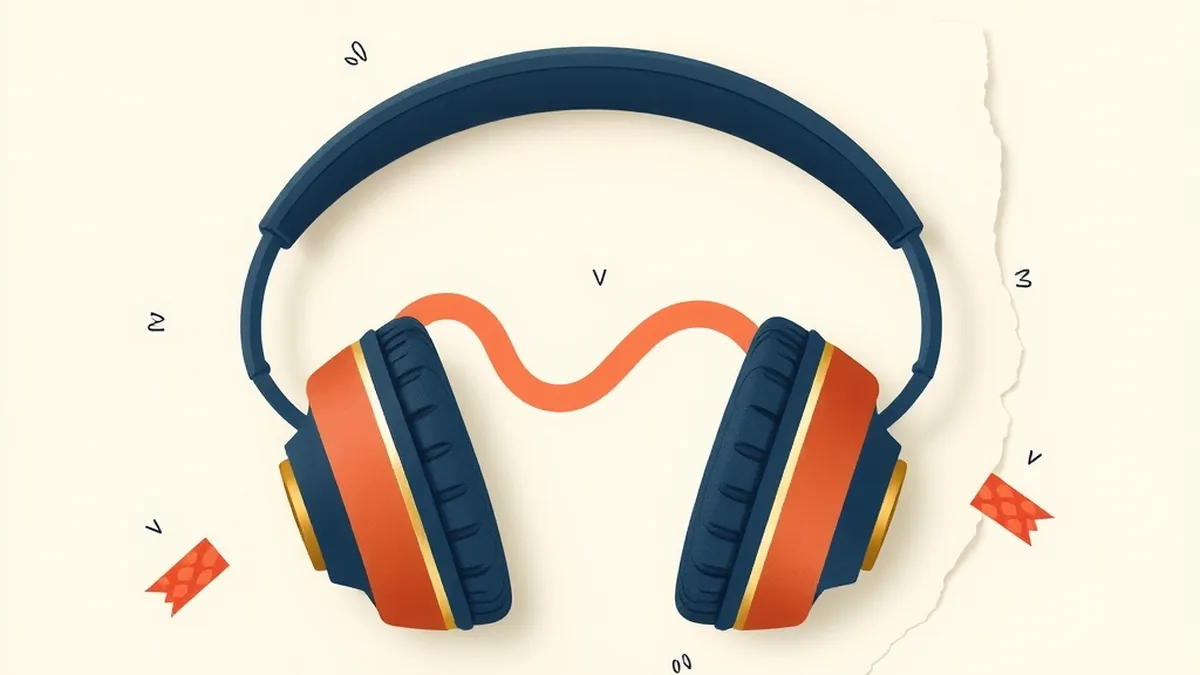
A student presses the small button on the side of their headphones the moment they step off the bus and into the cafeteria hallway. The background roar drops — not to silence, but noticeably, suddenly quieter. Five minutes later, they’re trying to hold a conversation while wearing those same headphones, and their friend’s voice sounds muffled and distant. “Why does it block the hall noise but not my friend talking?”
That question has a real, teachable answer — and the answer splits cleanly into two separate mechanisms. One is a physics calculation that has existed since the late 1950s. The other is a machine-learning layer that only showed up in consumer headphones in the last few years. The fact that no one put this distinction in your curriculum materials is a gap in the available curriculum, not a reflection of what you can teach. The mechanism behind how noise cancelling headphones work is completely teachable without any device in the room.
TL;DR — How do noise-cancelling headphones work? A tiny microphone on the outside of the headphone hears incoming sound. The headphone’s processor generates an inverted “anti-noise” wave — identical in frequency and amplitude to the incoming noise, but flipped 180 degrees out of phase. When the anti-noise wave meets the original sound wave at your eardrum, the two waves cancel each other out through destructive interference. That is pure physics: no machine learning, no training data. Modern premium headphones add a second layer on top — a machine-learning model trained on thousands of hours of human speech, designed to pull a voice out of background noise. That second layer is the actual AI. Classic active noise cancellation (ANC) and AI voice isolation are different systems, built on different science, solving different problems.
How do noise-cancelling headphones actually work?
The short answer: a microphone, a processor, and a wave that fights another wave.
Active noise cancellation was not invented for music. Lawrence J. Fogel filed the foundational patents between 1958 and 1961 specifically to reduce helicopter cockpit noise for pilots (Wikipedia — Lawrence J. Fogel). Amar Bose — yes, that Bose — got the idea on a transatlantic flight in 1978 when the engine roar made his music unlistenable. He began developing a commercial aviation headset, and Bose shipped the first ANC aviation headset commercially in the late 1980s (Wikipedia — Noise-cancelling headphones). The core idea has not changed since.
Here is how the physics pipeline works, step by step:
Step 1 — Sense. A microphone on the outside of the earcup (or inside, near your ear) picks up the incoming sound wave — the engine hum, the cafeteria roar, the HVAC drone.
Step 2 — Invert. The onboard processor runs the captured waveform through a fixed mathematical filter — specifically a class of adaptive algorithms called FxLMS (Filtered-x Least Mean Squares) — and generates a waveform that is the exact mirror image of the incoming noise: same frequency, same amplitude, but shifted 180 degrees out of phase.
Step 3 — Cancel. The anti-noise wave is played into the earcup through the speaker, timed so it arrives at your eardrum at the same moment as the original noise. The positive pressure peaks of the noise wave meet the negative pressure troughs of the anti-wave — and they cancel.
The critical distinction for students: classic ANC uses no machine learning. The anti-wave is calculated in real time using deterministic math — FxLMS and related adaptive filters — not a model trained on labeled data. No AI is deciding what counts as noise. The algorithm applies the same inversion to every waveform it hears, regardless of what that sound is.
Feedforward, feedback, and hybrid — the three kinds of ANC
Not all noise-cancelling headphones sample the sound in the same place. The microphone’s position determines what the system can and cannot cancel well. There are three main approaches (Cardinal Peak — What Is ANC Technology?):
| Type | Mic placement | How it works | Best at | Weakness |
|---|---|---|---|---|
| Feedforward | Outside the earcup | Captures noise before it enters; generates anti-wave preemptively | Predictable, steady low-frequency noise (engine hum, AC) | Can’t correct for errors inside the earcup; slightly delayed on sudden sounds |
| Feedback | Inside the earcup, near the eardrum | Listens to what actually reaches your ear and corrects residual noise | Catching anything that slipped past the feedforward stage | Reacts after the fact; can cause oscillation on sharp transients |
| Hybrid | Both inside and outside | Combines both signals for the widest correction range | Broadest frequency range and most consistent performance | More power draw; more complex circuitry |
Most premium headphones released between 2024 and 2026 use the hybrid approach. The feedforward mic catches the incoming wave early; the feedback mic checks what actually arrived and trims the remainder. Together they push effective cancellation across a wider band than either alone.
Why can’t noise cancellation block voices?
The short answer: destructive interference has a frequency ceiling, and human speech lives above it.
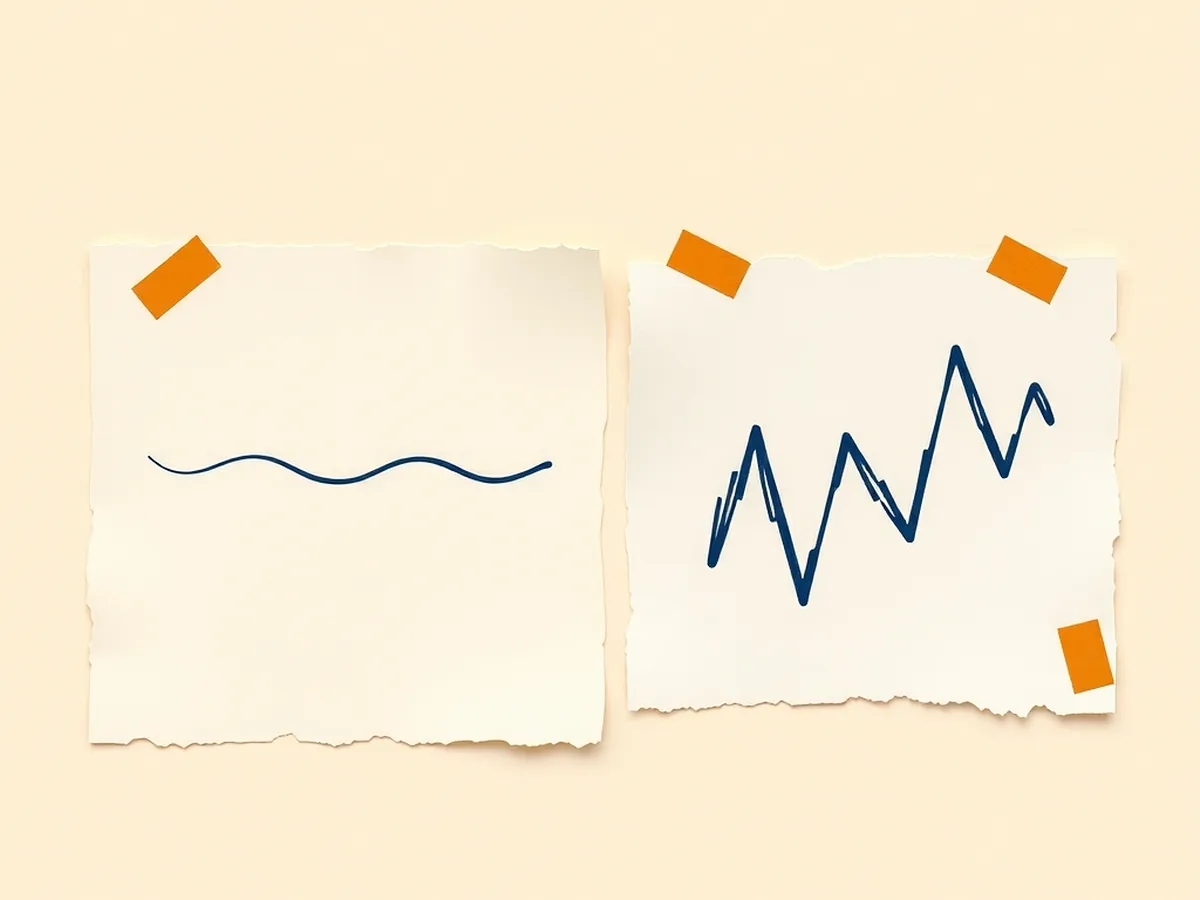
This is the single most teachable fact about ANC, and it comes straight from wave physics. Destructive interference works reliably when the processor has enough time to compute an accurate inverse wave before the original sound reaches the eardrum. Low-frequency sounds — below roughly 1 kHz — have long wavelengths and change slowly enough that the processor can stay ahead of them. Jet-engine hum, air-conditioning drone, bus-engine rumble: all live in this range, all cancel well.
Human speech sits between approximately 300 Hz and 3,000 Hz. The lower end overlaps with ANC’s effective range, which is why voices sound slightly muffled with ANC on — some lower frequencies are partially cancelled. But the middle and upper range of speech changes too fast for the circuit to track. The processor cannot compute an accurate enough inverse in time, so the cancellation is incomplete at best and can actually amplify some frequencies if the anti-wave arrives even slightly off-phase (ScienceABC — Why ANC Is Less Effective at High-Pitched Sounds).
A second physical constraint: mic placement. The feedback mic sits only a few millimeters from your eardrum. A positioning error of even 1 mm means the anti-wave arrives slightly out of sync — instead of canceling the noise, it adds to it at certain frequencies. Lab measurements of real ANC headphones consistently show about 20–30 dB of noise reduction overall, with the strongest attenuation below 600 Hz and noticeably weaker performance above that threshold (Allion — ANC Headphone Performance Analysis).
One more distinction worth making explicit for students: noise cancellation (active — generates an anti-wave) versus noise isolation (passive — the physical ear cushion simply blocks sound by sitting tight against your ear, the same way earplugs do). Most headphones use both at once. Noise isolation works across all frequencies equally. ANC works only in the range where it can compute the inversion fast enough.
A quick no-prep demo: ask students to hum a steady note, then clap their hands once. The hum is steady and predictable — ANC can track it. The clap is a sudden transient — ANC cannot. That difference is the whole frequency-limit concept in two sounds. No headphones required.
Where the AI actually comes in — voice isolation and adaptive ANC
Here is the contrast table that matters for AI literacy.
Classic ANC inverts the whole incoming waveform without asking what kind of sound it is. It cannot distinguish your friend’s voice from a ventilation fan. A machine-learning voice isolation model asks a fundamentally different question: “Is this sound human speech — and is it the speech of the person wearing these headphones?” That requires training on labeled data, not just math.
| Classic ANC | ML voice isolation | |
|---|---|---|
| What it does | Inverts the entire incoming sound wave | Separates human speech from non-speech background |
| Underlying method | Real-time adaptive math (FxLMS) — trained on nothing | Neural network trained on thousands of hours of speech |
| Good at | Steady, low-frequency ambient noise | Irregular, mid-to-high-frequency speech in noisy environments |
| Can it recognize your voice specifically? | No — it treats all waveforms identically | Yes, with enrollment — some systems learn to track a specific speaker |
| Fails when | Sound changes too fast or sits above ~1 kHz | Training data doesn’t represent the speaker’s voice or accent |
Several real deployments show what this ML layer looks like in practice:
Apple Voice Isolation (2021) runs entirely on-device using Apple’s Neural Engine. It is designed to isolate the wearer’s voice on phone and FaceTime calls — filtering out background noise before the audio leaves the device. Apple describes it as using on-device machine learning; independent characterizations align with a DNN approach trained on speech and noise pairs.
Google Pixel “Clear Calling” launched on the Pixel 7 in 2022 (Pocket-lint — What Is Clear Calling?). Google extended similar on-device speech processing to the Pixel Buds Pro 2 in 2024, powered by the Tensor A1 chip. The system processes both the incoming voice (filtering what you hear) and the outgoing voice (filtering what the other person hears).
Krisp is a software application that runs a deep neural network trained on what Krisp describes as “thousands of hours” of voice and noise samples to separate speech from background. Krisp claims its model provides up to “3.5x better noise suppression” than standard ANC — this is a vendor claim and has not been independently verified as of this writing (Krisp — How Noise-Cancelling Headphones Work).
University of Washington “Target Speech Hearing” is the most striking research prototype. Published in May 2024 at ACM CHI (University of Washington News / MIT Technology Review): a user looks at one specific speaker for three to five seconds while wearing the headphones. Onboard ML learns that person’s voice signature and isolates only their voice from the ambient mix. In a study of 21 participants, the enrolled target voice was rated nearly twice as clear as unenrolled voices in noisy conditions. The system currently handles one enrolled speaker at a time and is not available commercially as of 2026 — but it demonstrates the logical endpoint of the ML layer.
Whose voice does AI voice isolation work best on?
This is the equity hook — and it applies to every speech-processing ML model.
A 2025 peer-reviewed study published at ACM and available on arXiv examined accent and dialect variation in AI voice services. It found recognition accuracy of roughly 90–98% for American and British English accents, dropping to approximately 67–81% for African, Australian, and Indian English accents (arXiv 2504.09346).
One important scope note for classroom use: that study measured AI voice services broadly — speech recognition and synthesis systems — not in-headphone voice isolation specifically. Do not present it as a measured headphone finding. The relevant lesson is more general: any machine-learning model trained on speech inherits the biases of whatever voices were — or were not — in its training data. If the training set skewed toward certain accents, the model skews too. That is not a hardware flaw. It is a data-collection decision with downstream consequences for real users.
The classroom discussion question: “If an AI voice isolation system was trained mostly on recordings from one region or demographic, what should a student in your school expect to experience — and who would you ask to fix it?”
This connects directly to AI4K12 Big Idea #5 (societal impact): AI systems affect different communities differently, and those differences trace back to design and data choices. For a deeper dive into how to structure this kind of equity discussion, the sibling post How Voice Assistants Work covers accent bias in speech recognition with a specific PNAS-cited study and a role-play activity that surfaces the failure live.
A no-device lesson: “Be the Noise-Canceller” (grades 6-8, ~45 minutes)
This is the activity where the physics stops being abstract.
Students role-play the ANC pipeline — and then discover exactly why voices slip through. A typical class finishes all three rounds plus debrief in about 40–45 minutes. No devices needed.
What you need: Index cards or small whiteboards, markers. Optional: a simple printed “waveform card” with a sine wave drawn on it, plus a matching “inverted wave” card (a sine wave flipped upside-down). If you don’t print anything, students draw the waves themselves.
Assign roles (5 minutes). Four roles, one student or small group each:
- Outside Mic — senses incoming sound, describes it to the group
- Anti-Wave Generator — must produce the exact opposite of whatever Outside Mic says
- Eardrum — receives both the original wave and the anti-wave; reports whether they cancel
- ML Voice Isolation Model — added in Round 3 only (see below)
Round 1 — The steady hum (10 minutes). A student not in a role hums a single continuous note (or taps a steady rhythm). Outside Mic describes it: “Steady, low, unchanging.” Anti-Wave Generator holds up their inverted-wave card (or draws the mirror image). Eardrum reports: “Cancelled — I hear almost nothing.” Debrief: this is ANC working as designed. Steady, predictable, low-frequency. The math can keep up.
Round 2 — The sudden clap (10 minutes). A student claps once, sharply, with no warning. Outside Mic hears it but cannot describe it fast enough. Anti-Wave Generator is one second behind — they hold up their inverted card a moment after the Eardrum has already received the original clap. Eardrum reports: “I heard the clap. The anti-wave arrived too late.” Debrief: this is ANC’s timing failure. Sudden transients change too fast. Then add a student speaking a sentence while the hum continues. Outside Mic now has two overlapping signals and must describe both simultaneously. Anti-Wave Generator cannot invert them independently in real time. Eardrum reports partial cancellation. Ask: why does the voice get through when the hum doesn’t?
Round 3 — The ML layer (10 minutes). Introduce the ML Voice Isolation Model role. This student’s job: before the round begins, spend 30 seconds “enrolling” — listening to one specific student’s voice and memorizing a small signature (e.g., “Jordan’s voice is higher-pitched and faster than the background noise”). When the round runs with multiple simultaneous speakers, the ML Model can now flag “Jordan speaking” separately from background. The Eardrum receives a cleaner version of Jordan’s voice. Debrief: the ML layer didn’t remove noise by inverting it. It recognized and separated speech from non-speech based on learned patterns. Different problem, different method.
Debrief question (5 minutes). “In Round 2, at which exact step did the cancellation fail — and what would you need to change about the system to fix it?” Students write two sentences for an exit ticket.
Standards crosswalk:
| Activity step | Standard code | What it shows |
|---|---|---|
| Hum round — steady wave inversion | NGSS MS-PS4-1 | Waves transfer energy; a sound wave has amplitude, frequency, and wavelength |
| Clap round — timing failure and frequency limit | NGSS MS-PS4-2 | Wave behavior: when waves meet, they interfere constructively or destructively |
| ”Why does the voice get through?” discussion | ISTE 1.3.b | Evaluate accuracy, credibility, and relevance of an information source or tool |
| ML enrollment round — different question, different method | ISTE 1.3.d | Explore real-world issues and problems to develop ideas |
| Roles setup and who gets enrolled | ISTE 1.2.b | Engage in positive, safe, and legal behavior on digital platforms |
| Anti-wave generator role — what ANC can and cannot do | AI4K12 Big Idea #3 | Models learn from data; what they learn depends on what data they had |
| ML role — training on speech, accent bias debrief | AI4K12 Big Idea #5 | AI has societal impacts; design choices affect different communities differently |
| Group discussion across all rounds | CCSS.ELA-LITERACY.SL.7.1 | Engage in collaborative discussion, building on others’ ideas |
| Exit-ticket writing | CCSS.ELA-LITERACY.W.7.8 | Gather relevant information and assess source accuracy |
Standards source: NGSS — Next Generation Science Standards; AI4K12 Initiative; ISTE Student Standards. ISTE is a registered trademark of the International Society for Technology in Education. These resources are not affiliated with or endorsed by ISTE.
The NGSS wave standards (MS-PS4-1 and MS-PS4-2) make this lesson a natural fit inside a science unit on waves and energy — which is where many grade-7 and grade-8 science teachers encounter this content first. That science hook is also where the no-device format earns its place: the role-play physically demonstrates destructive interference without needing an oscilloscope or a signal generator.
Why this lesson closes a real gap
The mechanism behind noise-cancelling headphones shows up in every student’s daily life — on the bus, in the hallway between classes, at home during a video call. Most students assume it is all one thing called “AI that cancels noise.” It is not. The physics layer (ANC) and the ML layer (voice isolation) answer different questions, run on different methods, and fail in different situations. A student who can articulate that difference is not just technically informed. They are asking the right question about any new audio tool they encounter: what problem is this system actually solving?
That framing is AI literacy — the durable, transferable kind. And the fact that it was never packaged in a curriculum you were handed is a gap in the available materials, not your gap. You just taught a graduate-level mechanism with zero devices, zero budget, and forty-five minutes.
For the full arc that puts this mechanism inside a structured year-long sequence — including how ML models learn from data, how AI systems fail, and how to evaluate AI tools — the How AI Works MEGA bundle includes 16 complete lessons with teacher plans, student pages, and answer keys for grades 6-12. For the narrow-vs.-general AI distinction that the ANC-vs.-voice-isolation contrast surfaces — both are narrow AI, but in very different ways — the Types of AI Deep-Dive lesson is the natural follow-on. And for ten more activities in exactly this no-device format — role-plays, card sorts, unplugged rounds — the Unplugged AI Activities collection has complete lessons ready to run.
For the audio-AI mechanism posts in this series: How Shazam Recognizes Songs covers the same classical-signal-processing-vs-ML contrast through audio fingerprinting, and How Voice Assistants Work walks through the full speech-recognition pipeline with a matching unplugged role-play. Browse the full shop for additional units, or pick up a free starter lesson to see the format before committing.
This post was drafted with AI assistance and human-finalized.
Quick questions
A microphone on the outside of the headphone hears incoming sound. The processor generates an inverted anti-noise wave — 180 degrees out of phase — and plays it into the earcup. The original wave and the anti-wave meet at your eardrum and cancel each other through destructive interference. That is physics, not AI. A second ML layer in modern headphones adds voice isolation on top.
ANC works best on steady, low-frequency sound below roughly 1 kHz — think jet-engine hum or AC drone. Human speech sits between 300 and 3,000 Hz and changes too fast for the circuit to compute an accurate inverse in time. A positioning error of even 1 mm between the mic and the eardrum also throws the anti-wave out of phase. So voices slip through.
Noise cancellation is active — the headphone generates an anti-wave to cancel incoming sound electronically. Noise isolation is passive — the physical ear cushion simply blocks sound by sitting tight against your ear, the same way earplugs work. Most headphones use both at once.
Get the free AI-Proof Assignment Toolkit
10 ways to redesign any assignment so an AI chatbot structurally can't do it — plus a redesign worksheet, a 45-minute lesson, the “Spot AI Work” card, and parent templates. One email, all 5 pieces.
Prefer the full breakdown? See everything inside the toolkit →