How Noise-Cancelling Headphones Work — Middle School Lesson
You know the scene: the last ten minutes before a bell, half the class has one earbud tucked in, and someone asks why their headphones “turn off the bus.” Meanwhile you were told to cover “how AI works” this year — and handed almost nothing to teach it with. Here is the good news: one of the clearest AI lessons is already in your students’ pockets. Noise-cancelling headphones sit right on the seam between old physics and new machine learning, and that seam is exactly what makes the invisible mechanism teachable. This is not your fault territory — nobody gave you the map, so here is one.
The cancellation is physics; the adaptation is AI. When you switch on noise cancelling, a tiny microphone samples the sound around you and the earbud plays an inverted “anti-noise” wave that flattens it out through destructive interference — a decades-old idea with no AI involved. The newer adaptive features are the AI part: on-device machine learning classifies your sound environment — are you talking, on a bus, in a quiet room? — and adjusts the cancellation in real time. This lesson gives grades 6-8 a no-device way to see both layers in a single class period.
What happens when you switch on noise cancelling?
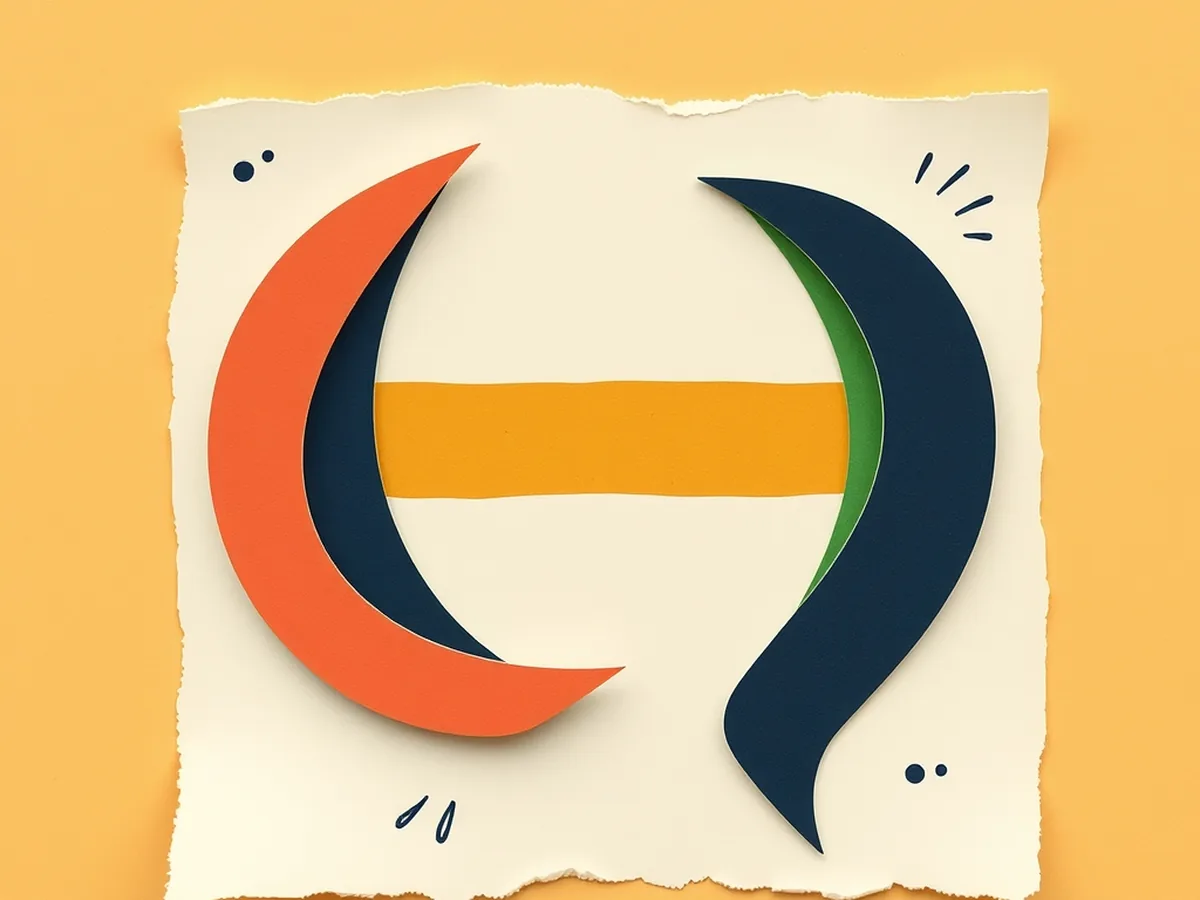
The moment you press the ANC button, a tiny microphone on the outside of the earbud starts sampling the sound around you. The earbud’s processor takes that sample and generates an inverted version — a wave with the same shape but flipped upside-down. That anti-noise wave plays through the speaker at the same instant the original sound arrives. The two waves meet, and because they are equal and opposite, they add up to near-silence. That is destructive interference, and it has been well-understood physics since long before anyone put it in a consumer earbud.
Destructive interference is a predictable, measurable outcome — not magic. This is the key concept to anchor before introducing the AI layer, and it maps to NGSS MS-PS4-1 (wave properties, amplitude, and interference) and the broader MS-PS4 disciplinary core idea on waves and electromagnetic radiation.
The part that’s physics vs. the part that’s AI

Most of what a noise-cancelling earbud does is decades-old physics. The AI is only the newer adaptive layer on top.
Here is the honest split:
| What the layer does | Physics or AI? | Real example |
|---|---|---|
| Invert the sound wave to cancel steady hum | Physics | Destructive interference — the foundational principle behind all ANC |
| First noise-cancelling patent | Physics | Lawrence Fogel patented active noise control for aircraft cockpits in the late 1950s |
| First consumer product | Physics | Amar Bose sketched the concept on a 1978 flight; Bose aviation headsets shipped in 1989 (Bose Aviation history) |
| Sense that you’ve started talking and pause or adjust cancellation | AI | Apple AirPods Pro “Conversation Awareness” / Adaptive Audio (2023) uses on-device machine learning to detect speech |
| Classify your environment (crowded bus vs. quiet room) and set cancellation depth accordingly | AI | Sony “Speak-to-Chat” and 2025 adaptive-ANC classifiers sample the environment many times per second to re-tune the response |
The distinction matters pedagogically. When a student holds a pair of Sony earbuds and asks “is this AI?” the honest answer is “partly.” The wave-cancellation hardware is not AI. The classifier that decides how much cancellation to apply and when — the part that learns what a sound environment looks like — is.
That adaptive layer is a textbook example of AI4K12 Big Idea #3 (Learning — computers can learn from labeled examples and from experience), specifically pattern-classification on real-time audio data. It also makes a clean anchor for ISTE 1.3.d (Knowledge Constructor — students build understanding by exploring real-world devices and pursuing active investigation rather than accepting a tech label at face value).
Here is the belief worth naming out loud before the lesson: the reason this distinction feels confusing is not that the technology is too complex — it is that most materials about AI jump to the punchline without mapping the seam between physics and computation. When you can show students exactly where the physics stops and the learning starts, the whole concept becomes navigable. No curriculum handed most teachers that map — so a structured version like the Types of AI Deep-Dive Lesson (Grades 6–8) exists to fill exactly that gap.
Where noise cancelling fails (and why)
ANC works best on low-frequency, steady-state sounds — engine rumble, HVAC hum, air conditioning, anything that repeats predictably below roughly 1 kHz. It struggles with sudden, high-frequency, or irregular sounds: a door slamming, a voice cutting through, a bus horn.
The reason: the anti-noise system has to predict what the next few milliseconds of sound will look like. Steady engine hum is easy to predict. Speech is harder — it shifts pitch and rhythm unpredictably. A sudden impact sound arrives before the anti-noise generator can respond. The faster and less regular the wave, the bigger the gap between what the mic samples and what the speaker can cancel.
That gap is a real teaching moment about AI’s limits more broadly. Even the adaptive classifier doesn’t make ANC work on a jackhammer. AI4K12 Big Idea #5 (Societal Impact — understanding the limitations of AI systems) fits here precisely: students who expect AI to fix every problem run into friction when they meet what “AI-enhanced” devices can’t actually do. The useful classroom question is “What kind of signal does this system handle well, and what breaks it?” — a question that transfers far beyond earbuds.
The thing most students get wrong: it isn’t hearing protection
Noise cancelling is not hearing protection. That sentence is worth saying twice before the lesson starts.
Consumer earbuds — including noise-cancelling ones — are not rated or regulated as occupational hearing protection. The U.S. Occupational Safety and Health Administration (OSHA) and the National Institute for Occupational Safety and Health (NIOSH) require hearing protectors to carry a Noise Reduction Rating (NRR). Consumer earbuds carry no such rating. A student who blasts music at a concert while wearing AirPods Pro is still damaging their hearing; the ANC is reducing environmental noise so they can turn the music down, but the earbuds themselves are not a safety barrier. See the OSHA Noise and Hearing Conservation standards for the NRR requirement context.
This is an example of ISTE 1.3.b in action: evaluating the accuracy, credibility, and relevance of information — specifically, a piece of tech-marketing framing that students absorb and rarely question. The myth-bust writes itself: if ANC were hearing protection, the packaging would say so and carry a government rating number.
A no-device lesson: “Be the Anti-Noise” (45 minutes)
You can teach the complete mechanism — wave cancellation, the adaptive classifier, and system limitations — with zero technology in one class period. Here is a pacing block that fits a single 45-minute period.
- 0–5 min — Hook. Pose the question: “If two identical sounds play at exactly the same time but one is flipped upside-down, what do you hear?” Take three guesses. Write them on the board. Don’t answer yet.
- 5–15 min — Wave demo. Run a quick standing-wave demonstration with a jump rope or a long spring toy if available, or draw wave diagrams on the board. Show a peak meeting a trough. Show the sum: a flat line. Students answer the opening question themselves. This is destructive interference. Connect to The Physics Classroom’s interference tutorial as a follow-up reading anchor.
- 15–30 min — Role-play, round 1 (Physics layer). Divide the class into three groups: Noise Waves, Anti-Noise Waves, and the Processor. Noise Waves walk a pattern around the room. Anti-Noise Waves mirror them exactly — same path, arms inverted. The Processor counts: when they cancel cleanly, quiet; when they diverge, sound. This is the physics layer only.
- 30–40 min — Role-play, round 2 (AI layer). Add a fourth group: the Classifier. The Classifier’s job is to read a scenario card — “You are on a crowded bus” / “You are in a quiet library” / “Someone started talking to you” — and call a cancellation level (full / partial / off). Anti-Noise Waves adjust their response based on what the Classifier calls. This is the adaptive AI layer. Students experience that the Classifier is making a decision, not following a fixed rule.
- 40–45 min — Debrief. Return to the board. Ask: “Which parts of what you just did were physics? Which were something more like a decision?” Use student language to map back to the vocabulary. Assign: write one paragraph explaining, in your own words, how destructive interference and a classifier work together in a noise-cancelling earbud. Cite at least one source.
When you run this, the debate in the Classifier group — “Is talking to someone different from background speech? How would the earbud know?” — is often the richest conversation of the period. That question has no clean answer, and the discomfort is intentional.
This activity hits CCSS.ELA-LITERACY.SL.7.1 (collaborative discussion — pose and respond to questions, acknowledge new evidence) and sets up CCSS.ELA-LITERACY.W.7.8 (gather information from multiple print and digital sources, assess credibility and accuracy of each) in the follow-up citation paragraph.
For a complete unplugged sequence that extends this into machine-learning classification, bias, and societal impact, the Unplugged AI Activities: 10 No-Tech Lessons (Grades 6–8) on TPT includes card-sort and role-play formats ready to run. If you want the full machine-learning concept arc — from a “Be the Anti-Noise” style physical model all the way through classification accuracy — the How AI Works MEGA: 16 Machine Learning + AI Concept Lessons (Grades 6–12) is the systematic version.
How this fits your standards
This single lesson touches science wave physics, ELA collaborative discussion, and AI-literacy standards in one 45-minute block. Here is the full crosswalk if you need it for a unit plan or admin conversation.
| Activity step | Standard code | Standard description |
|---|---|---|
| Destructive interference demo + wave diagram | MS-PS4-1 (NGSS) | Use mathematical representations to describe a model for waves |
| Noise Waves + Anti-Noise Waves role-play | MS-PS4 (NGSS) | Waves and their applications — interference as a wave property |
| Classifier role-play — environment decisions | AI4K12 Big Idea #3 | Computers learn from labeled examples and experience (pattern classification) |
| “What breaks the system?” discussion | AI4K12 Big Idea #5 | Societal impact — understanding AI limitations |
| ANC ≠ hearing protection myth-bust | ISTE 1.3.b | Evaluate accuracy, credibility, and relevance of information |
| Classifier debrief — physics vs. decision | ISTE 1.3.d | Build knowledge by exploring real-world issues and active investigation |
| Collaborative role-play discussion | CCSS.ELA-LITERACY.SL.7.1 | Engage in collaborative discussion, pose and respond to questions |
| Follow-up citation paragraph | CCSS.ELA-LITERACY.W.7.8 | Gather information from multiple sources, assess credibility and accuracy |
The broader point worth carrying into any conversation about teaching AI: the confusion most teachers feel when asked to “cover AI” is not a gap in their expertise — it is a gap in the materials handed to them. A device every student already owns, explained down to the seam between physics and machine learning, is one concrete way to make the invisible visible. That is what a how AI noise cancellation works lesson does.
For the audio-processing thread — if you liked tracing how the earbud handles sound, the companion post on how voice assistants hear and process language extends the same idea from the microphone to natural language understanding. Browse the full shop to see the complete sequence of AI literacy units by grade band.
This post was drafted with AI assistance and human-finalized.
Quick questions
Partly. The cancellation itself is physics — a microphone samples the noise and the earbud plays an inverted anti-noise wave that cancels it. The newer adaptive features that sense your environment and adjust in real time are the machine-learning part.
No. Consumer noise-cancelling earbuds are not rated as hearing protection. Per OSHA and NIOSH, hearing protectors must carry a Noise Reduction Rating (NRR), and consumer earbuds do not.
Low, steady sounds like engine or HVAC hum, roughly below 1 kHz. It struggles with sudden or high-frequency sounds like speech or a door slam, which change too fast for the anti-noise to track.
Get the free AI-Proof Assignment Toolkit
10 ways to redesign any assignment so an AI chatbot structurally can't do it — plus a redesign worksheet, a 45-minute lesson, the “Spot AI Work” card, and parent templates. One email, all 5 pieces.
Prefer the full breakdown? See everything inside the toolkit →