Teaching AI bias in grade 8 — a 45-minute station activity

The hardest part of teaching AI bias to grade 8 students isn’t the concept — they get it fast. It’s giving them concrete examples they can audit themselves, instead of yet another slide-deck definition. Below is the 45-minute station activity we built after the 5th time we said “okay, but show me a real AI output that’s actually biased.”
This station rotation is the Identify → Audit → Redesign routine in practice — the core bias activity in Track B: Going Deeper — AI Ethics and Critical Thinking.
The activity in 30 seconds
Five stations. Each one has an AI-generated sample (printed, no internet required) with a specific bias problem hidden inside. Students rotate, identify the bias type, and write a one-sentence fix. End-of-class: 10-minute share-out. Done.
Why station rotation works for this topic
Bias-detection is fundamentally a pattern-recognition skill. Students need multiple examples in quick succession to build the pattern. A single example per slide doesn’t do it — they pattern-match on accident, not pattern-recognize on purpose. Stations force five reps in 30 minutes, which is the magic number.
The 5 bias types we cover
Station 1 — Cultural bias
Sample: AI describes “a typical wedding” — the description is entirely Western-Christian. Students identify what’s missing and why the AI defaulted that way.
Station 2 — Source bias
Sample: AI summarizes a historical event citing 4 sources, 3 of which are listed as URLs that don’t exist (hallucinated). Students Google each, mark real vs. fake, write why this is a research integrity issue.
Station 3 — Gender bias
Sample: AI describes “a typical CEO” using exclusively male pronouns and traditionally male names. Students rewrite the description gender-neutrally and discuss what’s lost / gained.
Station 4 — Temporal bias (out-of-date training data)
Sample: AI confidently describes “current” events that happened 18+ months ago and have since changed. Students fact-check against current news.
Station 5 — Recency bias (over-weighting recent events)
Sample: AI summarizes “the history of X” but disproportionately focuses on the past 2 years. Students compare to a textbook timeline and note the gap.

Rubric (the part that makes it gradeable)
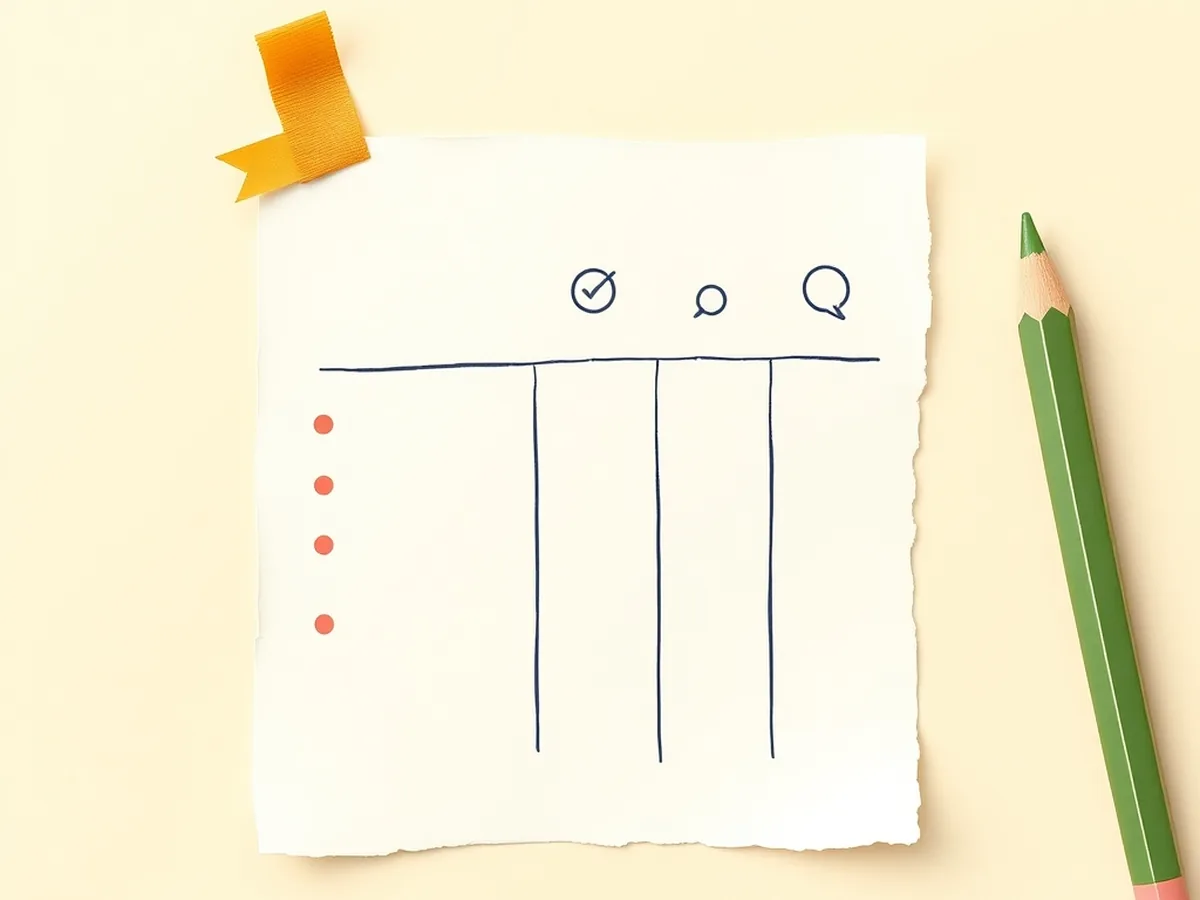
The student-facing rubric has 3 columns: Identified the bias (1 pt) · Explained the why (1 pt) · Wrote a one-sentence fix (1 pt). Five stations × 3 points = 15-point activity. Print on cardstock, students self-check answer key after the rotation.
The 10-minute share-out
After rotation, project all 5 samples on the board one at a time. Ask the room: “What bias did you spot?” Cold-call works well here because every student has at least one observation. Spend 90 seconds per sample. The point isn’t to land the “right” answer — it’s to surface multiple plausible reads.
Discussion guide (for the next-day debrief)
Three questions worth 5-10 minutes the next class period:
- “If AI training data is mostly from the internet, whose voice is over-represented?” (Answer surfaces who creates most internet content vs who uses it.)
- “How would you check for bias in an AI answer you use in your own writing?” (Practical takeaway — connects to ISTE 1.3.d active knowledge-building.)
- “Should the AI tell us when it’s not sure? Why doesn’t it?” (Connects to model-confidence + RLHF training — the rabbit hole some students will love.)
Standards crosswalk
For the broader framework this activity belongs to, see the AI literacy teaching guide for grades 6–12.
- ISTE 1.3.d: Knowledge Constructor — building knowledge by actively exploring real-world issues and problems (primary)
- ISTE 1.7.b: Global Collaborator — multiple cultural viewpoints (secondary, via Station 1 + 3)
- AI4K12 initiative Big Idea #3: Learning — how training data shapes model outputs
- CCSS.ELA-LITERACY.RI.8.6: Determine an author’s point of view or purpose and analyze how the author distinguishes their position from that of others
Standards source: ISTE Student Standards. ISTE is a registered trademark of the International Society for Technology in Education. These resources are not affiliated with or endorsed by ISTE.
Get the printable version
Three levels of depth — match the print order to where your class is this week:
- Free, no-gate worksheet — the AI Hallucination Fact-Check Worksheet covers Station 2 (source bias) on one printable page. Direct download on the free resources page — no email gate.
- Pro/con discussion pack — the AI Debate Activity Pack: 8 Pro/Con Prompts pairs with Stations 1 and 3 (cultural + gender bias) for an extended discussion period. Eight scenarios, each with a structured pro/con frame students argue from.
- Full unit bundle — the AI Literacy Complete Unit Bundle wraps vocab + lesson + workflow so this bias activity slots into a week-long ISTE 1.3.d / 1.7.b unit instead of standing alone.
If your students are also using AI in research writing, pair this with the AI hallucination worksheet for grade 7 ELA — the source-bias station on this activity carries directly into the fact-check routine in that one.
This post was drafted with AI assistance and human-finalized.
Quick questions
Grade 8. It is a printable 45-minute station-rotation activity where students audit real AI outputs for bias.
Five bias types, including cultural, source, and gender bias, by auditing real AI outputs at rotating stations.
The article explains why station rotation works for teaching AI bias - it keeps students active and lets them examine multiple examples in one period.
Yes. It includes a rubric, plus a 10-minute share-out to close the lesson.
ISTE 1.3.d, ISTE 1.7.b, AI4K12 Big Idea #3, and CCSS.ELA-LITERACY.RI.8.6.
Get the free AI-Proof Assignment Toolkit
10 ways to redesign any assignment so an AI chatbot structurally can't do it — plus a redesign worksheet, a 45-minute lesson, the “Spot AI Work” card, and parent templates. One email, all 5 pieces.
Prefer the full breakdown? See everything inside the toolkit →