Using AI to Write Poetry With Students (Grades 6-8)
You paste a poetry prompt into ChatGPT — “Write a free-verse poem about change” — and four seconds later a technically-perfect poem appears on your screen. The line breaks are clean. The language is elevated. It even has a volta. And it could have been written by anyone. Or no one. There is nothing in those 14 lines that could only have come from one specific 7th grader on one specific Wednesday. That is the problem this post addresses, and it is also where the assignment gets interesting.
The situation most grades 6-8 ELA teachers are navigating isn’t “students are using AI to avoid writing poetry.” It’s something subtler: AI writes a fluent poem in seconds, so teachers wonder whether the task still means anything. The answer is yes — but only if the assignment shifts from “produce a poem” to “revise an AI poem toward a voice only you have.” That shift is the whole design move.
TL;DR: Have students draft a rough poem on paper first, then generate an AI version of the same prompt and compare the two. The AI poem will be fluent but generic — correct imagery, common words, abstract feelings. Students then revise the AI version toward their own voice, swapping in concrete details, personal language, and images that couldn’t have come from a statistical average. You assess the revision and the student’s brief written reasoning, not the AI output. The design neutralizes the “just use AI” shortcut because the shortcut produces the starting point, not the finished work.
Why does AI write technically-perfect but forgettable poems?

The short answer: AI generates the statistical average of every poem it has ever seen. When a model is trained on millions of texts, it learns which words and images follow which patterns — and the most-likely next word is, by definition, the most-common one. So when a student prompts “write a poem about longing,” the model reaches for silver moonlight and aching hearts and the silence between words, because those are the images that appear most often in poems about longing. They are correct. They are technically sound. They land with all the impact of a Wikipedia summary.
This is exactly what AI4K12 Big Idea #3 describes: computers learn from data. The model learned the conventions of poetry deeply, but it did not experience the specific broken bike on the specific afternoon that a real 12-year-old might reach for when writing about disappointment. The gap between “learned the pattern” and “lived the moment” is where student voice lives — and it is measurable.
A 2025 study published in Computers and Education: AI (Mak et al., n = 4,820) found that students who used ChatGPT in writing tasks produced text that became more positive and formal — but per a 2025 study, researchers raised direct concern that AI “homogenizes students’ voices.” That homogenization is not a failure mode. It is the model working exactly as designed. Understanding it is the first pedagogical move: the AI poem is evidence, not a shortcut.
The lesson: draft, generate, revise (paper-first)
The three-phase structure fits inside a standard 40-minute period. The paper-first constraint is not arbitrary — it is the visible-thinking mechanism that makes revision assessable.
Phase 1 — Draft (10 minutes, paper only): Students receive the prompt and write a rough poem by hand. No devices, no autocomplete. This does not need to be good. It needs to exist. The rough draft is the student’s claim about the subject before the AI weighs in. That claim is what the lesson protects.
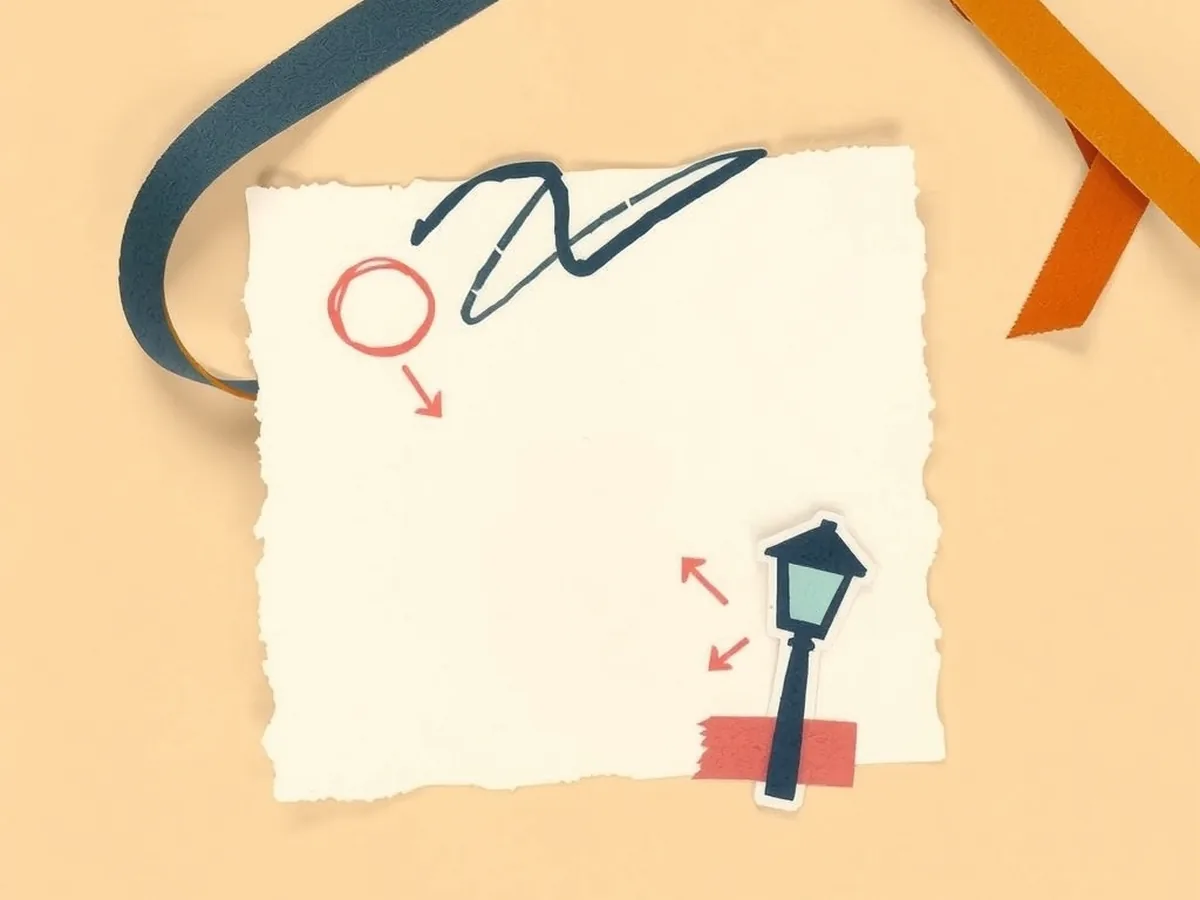
Phase 2 — Generate and compare (15 minutes): Students type the same prompt into a class-approved AI tool and read the output next to their handwritten draft. They annotate: circle one word in the AI poem that feels generic. Underline one image that feels like something anyone could have written. Star anything in their own draft that the AI poem does not have.
Phase 3 — Revise (15 minutes, paper): Students revise the AI poem toward their own voice — on paper, with the AI poem visible for reference. The goal is not to beat the AI. The goal is to make the poem theirs. Every word they swap, every image they replace, every line they cut creates a revision trail that is the actual learning artifact.
This structure aligns to ISTE 1.6.b, which asks students to create original works or responsibly repurpose digital resources — repurposing an AI-generated draft as a revision object is the standard in action, not a workaround.
The full lesson sequence — warm-up, prompt cards, a structured comparison sheet, the revision template, and a reflection exit ticket — is the AI Poetry Creative Writing Lesson (Grades 6-8) on our TPT store.
What revision actually looks like
The gap between an AI poem and a revised student poem is specific and teachable. Here is a worked example — invented but realistic, with no named student.
AI-generated poem (the starting point):
The silver moon hangs low and still, a gentle breeze moves through the night. I feel the weight of what has passed, the quiet ache of fading light. All things must change and slip away — the heart holds on, but time won’t stay.
This poem is technically competent. The imagery is consistent. The meter is controlled. And every image in it — silver moon, gentle breeze, fading light, things slip away — appears in thousands of poems across the training data. Nothing here could only have come from one specific person.
Student revision (after Phase 3):
The streetlight outside the gym flickers twice before the janitor gets to it. I stood there after the last bell of eighth grade holding a permission slip no one needed anymore. Things don’t fade out neatly. Sometimes they just stop getting fixed.
The difference is immediate. Here is what changed, concretely:
- Swapped “silver moon” (archetypal, universal) for “the streetlight outside the gym” (specific, locatable)
- Replaced “gentle breeze” and “fading light” (common atmospheric imagery) with a flickering light and a permission slip — two objects that carry feeling without naming it
- Cut the abstract closing (“the heart holds on, but time won’t stay”) and replaced it with an image that shows the abstraction instead of declaring it
- Removed every instance of the word “feel” — the revision shows, the AI version tells
The annotation step in Phase 2 is what makes this transfer possible. Students who name the generic word before they revise it are far more likely to replace it with something specific.
The fluent-but-generic checklist students can use
Print this as a half-sheet or project it during Phase 2. Students apply it to the AI poem before they begin revising.
- Is there an image only you could have written — a specific place, object, or moment from your own experience?
- Is there a word you chose because it is yours, not because it is the most common word for this feeling?
- Is there a line that surprises — that a reader could not have predicted from the line before it?
- Is there a specific sensory detail (a sound, a texture, a smell) rather than a named emotion?
- Is there anything in the poem that gives away when and where you were when this happened?
If the answer to every question is no, the poem is still in AI-average territory. The revision has more room to move. Students who run this checklist on their own draft — not just the AI poem — discover something useful: they sometimes write generic lines too, and the checklist applies there as well.
Using AI to analyze poetry, not just write it
The second angle for using AI to write poetry with students is analysis — using the AI as a discussion partner to surface literary devices and interpretations, then evaluating whether the AI’s reading holds up against the actual text.
A 7th-grade teacher could introduce this as a two-step protocol: students read a short poem independently and annotate for tone, imagery, and any devices they notice. Then they paste the poem into a class AI tool and ask it to identify the central metaphor and give two pieces of textual evidence. Students compare the AI’s reading to their own: Does the AI’s metaphor identification match what they found? Is the evidence it cites actually in the poem? Does the AI miss anything?
This is the AI poem analysis lesson angle that targets ISTE 1.3.d — building knowledge by actively exploring real-world issues and pursuing answers and solutions. Students are not passively receiving the AI’s literary interpretation. They are interrogating it with the text as evidence. The AI can surface a device a student missed; the student can catch an AI interpretation that overstates or distorts a line. Both moves build close-reading skill.
The AI Poetry Analysis Lesson (Grades 6-8) includes structured annotation templates, the AI comparison protocol, and discussion sentence frames for the post-analysis conversation. For the companion writing assignment — where students then write in response to the poem they analyzed — pair it with the AI Voice in Writing Lesson for the full revision arc.
Standards crosswalk + assessing voice
Every phase of this lesson maps to a standards anchor you can name in a unit plan.
| Lesson phase | Standard | What students demonstrate |
|---|---|---|
| Draft (paper) | CCSS.ELA-LITERACY.W.7.5 | Develop and strengthen writing by planning and revising |
| Generate + Compare | AI4K12 Big Idea #3 | Understand that AI learns patterns from data; recognize limits of pattern-based output |
| Revise | ISTE 1.6.b | Create original works or responsibly repurpose digital resources |
| Analyze | ISTE 1.3.d | Build knowledge by actively exploring and evaluating AI-generated interpretations |
Standards source: ISTE Student Standards. ISTE is a registered trademark of the International Society for Technology in Education. These resources are not affiliated with or endorsed by ISTE.
What to assess — and what not to. Grade the revision, not the AI poem. Grade the student’s two-sentence written reflection: “What did I change, and why?” A student who writes “I swapped ‘fading light’ for the broken lockerroom bulb because that’s the actual light I remember” has demonstrated the critical thinking the lesson is designed to build. A student who writes “I made it more specific” has told you the vocabulary without applying it — that is your next conference.
You cannot ban AI out of poetry. You cannot detect your way out of it either. What you can do is design the task so the revision is the work — and the work requires something the AI cannot supply: the specific, irreplaceable detail that belongs to one student and no one else. That is the out-design move, and it is teachable.
For more on helping students develop the critical lens to revise AI writing toward their own voice, see how to teach students to revise AI writing for voice in middle school. If you want to test-drive with a free resource first, the free starter pack includes printable AI literacy materials for the first week of class.
This post was drafted with AI assistance and human-finalized.
Quick questions
Have students draft a rough poem on paper first, then generate an AI version of the same prompt and compare the two. Students revise the AI poem toward their own voice — swapping in concrete, personal details — and you assess the revision and their brief reasoning, not the AI output.
AI generates the statistical average of the poems it was trained on, so it reaches for the most common image and word for any prompt — silver moonlight, aching hearts, fading light. Those choices are technically correct but generic, which is exactly what makes an AI poem feel like it could have been written by anyone or no one.
Yes. Students annotate a poem independently, then ask an AI to identify the central metaphor and cite textual evidence, and finally evaluate whether the AI's reading holds up against the actual text. It builds close-reading skill because students interrogate the AI's interpretation rather than accept it.
Get the free AI-Proof Assignment Toolkit
10 ways to redesign any assignment so an AI chatbot structurally can't do it — plus a redesign worksheet, a 45-minute lesson, the “Spot AI Work” card, and parent templates. One email, all 5 pieces.
Prefer the full breakdown? See everything inside the toolkit →