Who Owns AI-Generated Art? A Middle School Lesson Plan
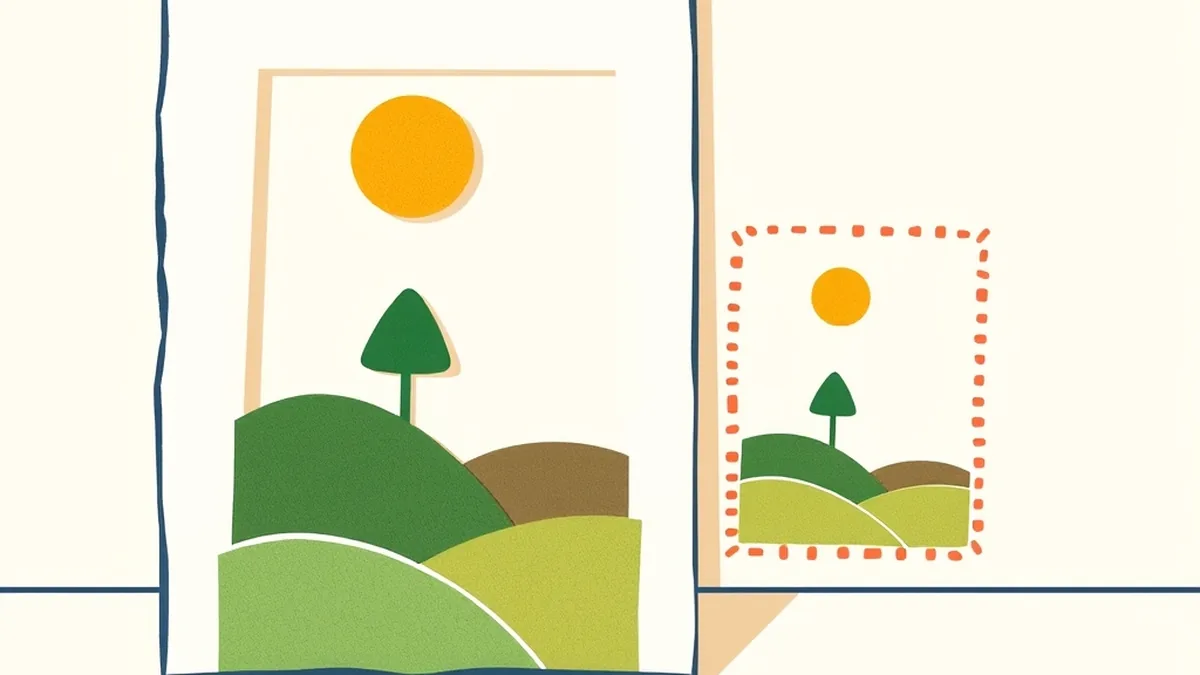
A student raises their hand at the end of class and holds up a tablet screen. The image is striking — a dragon coiled over a glowing neon city, mist rolling in from the edges, color gradients that would have taken a skilled illustrator hours. Then comes the question: “Can I put this in my portfolio? Is it mine?”
You pause. You know it was generated in thirty seconds from a text prompt. You know something about copyright law has shifted in the past two years. But nobody handed you a lesson on exactly this moment — what the rules are now, what you’re supposed to tell a twelve-year-old who genuinely wants to know whether their creative work counts. The gap in your classroom isn’t a discipline problem and it isn’t a failure on your part. There is simply no curriculum for this yet. The law is still catching up. That’s the starting point.
TL;DR: In the United States, an image generated from a text prompt alone is not copyrightable. The US Copyright Office’s January 2025 report on AI and copyright (Part 2) makes this explicit: AI-generated outputs, absent meaningful human creative input, lack the authorship required for protection. Only the human-authored portions — the arrangement, the editing choices, the added text — can qualify. If you’re looking for a ready-made who owns AI generated art lesson plan, the 30-minute debate structure in section four below is built around exactly this ruling and the student scenario that goes with it.
Who owns AI-generated art? What the Copyright Office actually says
The short answer is: in most cases, nobody — at least not the person who typed the prompt.
The US Copyright Office’s Part 2 report on Artificial Intelligence and Copyright, published January 29, 2025, is the clearest federal statement yet on the question. The Office concluded that AI-generated outputs, “absent meaningful human creative input,” lack the necessary authorship required for copyright protection. A text prompt, by itself, does not constitute that creative input. The human curates, selects, and arranges — but the model generates. That distinction is the one that matters in court.
The principle has legal precedent. In the Zarya of the Dawn case (2023), the Copyright Office registered Kristina Kashtanova’s graphic novel as a whole — the text and the arrangement of images were protected as human-authored work — but the individual Midjourney-generated images were explicitly excluded from that protection. The Creative Commons summary of the Zarya decision is clear: AI-generated images alone do not qualify. Human selection, sequencing, and creative expression around those images can.
What this means practically for a student who typed a dragon prompt and changed nothing: the image is not theirs under current US copyright law. But what if they had edited it significantly? Added hand-drawn elements? Arranged multiple images into a narrative sequence? That is exactly where the classroom conversation starts.
Standards anchor: ISTE 1.2.c (Digital Citizen — students demonstrate an understanding of and respect for the rights and obligations of using and sharing intellectual property).
How does AI image generation work? (the noise-to-picture loop)
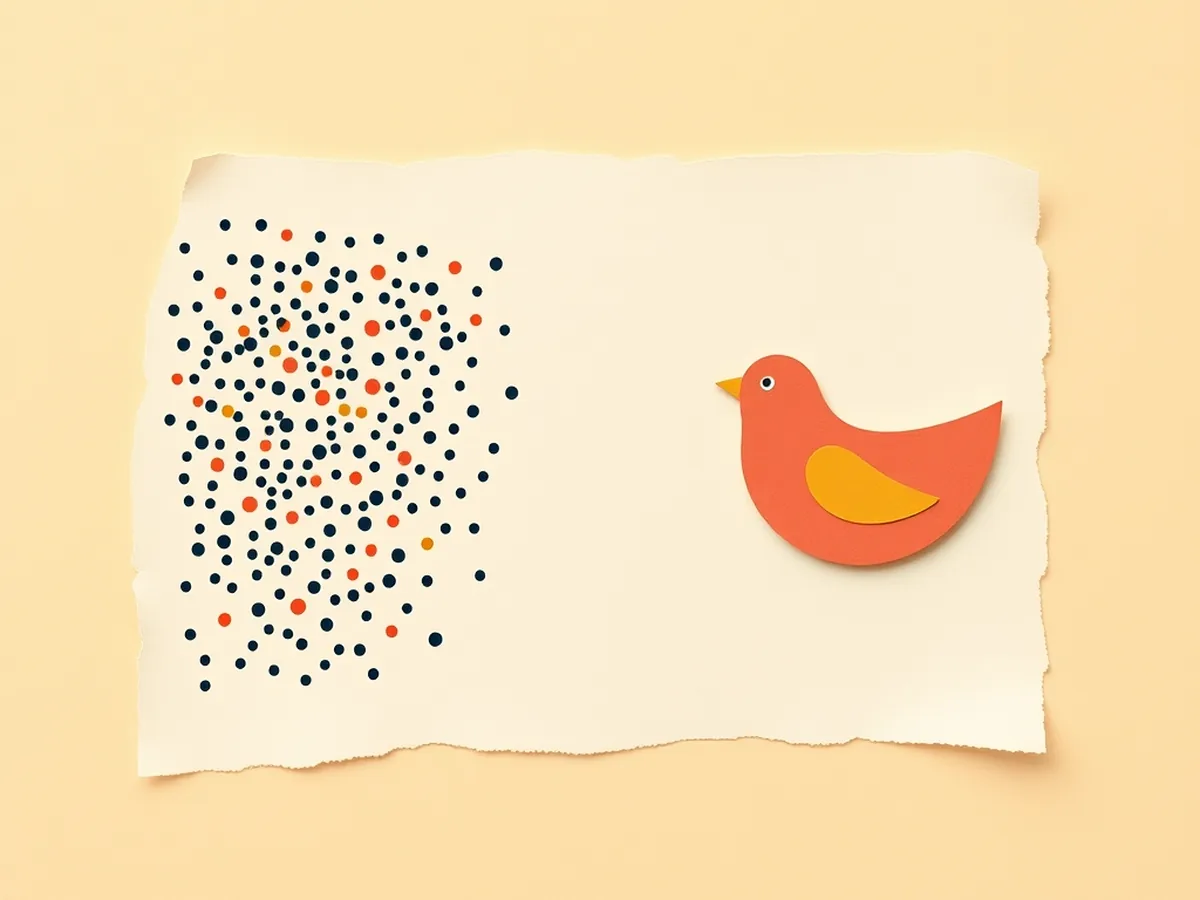
Before students can debate ownership, they need a working mental model of how the image was made. Without it, the conversation stalls at “the computer drew it.”
Diffusion models — the technology behind most current AI image generators — work by learning to reverse a process of destruction. During training, the model saw millions of images gradually corrupted with noise (think: TV static added in layers) until only static remained. It learned to predict, at each step, what the previous less-noisy version looked like. When generating a new image, the model starts from pure noise and removes it over roughly 20 to 50 steps, guided at each step by the text prompt, until a recognizable image emerges. The prompt doesn’t draw anything — it steers the denoising. For a plain-language technical breakdown, IBM’s diffusion model explainer covers the mechanism in accessible terms.
This sits inside AI4K12 Big Idea #3 (Learning — models learn patterns from data). The model didn’t understand “dragon over a neon city.” It learned statistical patterns from millions of labeled images and applied them.
Unplugged Diffusion — a hands-on activity that mirrors denoising
This activity takes about 10-15 minutes and requires no devices.
Materials: blank paper, pencils, and a deliberately scribbled or heavily cross-hatched drawing that vaguely suggests a simple shape (a house, a star, a fish).
Steps:
- Round 1 — the noisy version. Each student receives (or draws) a starting scribble that contains a hidden shape. Their only instruction: “there is a simple object hidden in this noise.”
- Round 2 — guided denoising. A partner looks at the scribble and lightly erases one layer of cross-hatching, trying to reveal structure. After one pass, they pass it back. The original student does the same — one small clarifying erasure.
- Repeat for 3-4 rounds. Each round, less noise. Each round, the shape becomes clearer.
- Reveal and compare. Students compare their final drawing to the original hidden shape. Where did the denoising go the wrong direction? Where did it get closer?
- Debrief question: “The AI does this 20 to 50 times per image. Who is making the creative decisions — the model, or the person who typed the prompt?”
The debrief question is the bridge to the ownership conversation. A typical class finishes the activity in 15-20 minutes and lands on genuinely divided opinions about where creativity lives.
The lesson plan: a 30-minute “who owns it?” debate for grades 6-8
This structure works as a standalone period or as the second half of a double block after the Unplugged Diffusion activity.
0-5 min — hook image. Project a striking AI-generated image (freely available on public platforms) with no context. Ask: “Who made this? Who owns it?” Take a quick show-of-hands poll. Don’t answer yet.
5-12 min — mini-explainer. Walk through the Copyright Office’s 2025 ruling in plain language: prompt alone = no copyright. Human edits + arrangement = possibly protected. Use the Zarya graphic novel as the concrete example. Write the two conditions on the board: generated only vs. human-authored selection/edit.
12-22 min — four-corners debate. Post four signs around the room: Strongly Agree / Agree / Disagree / Strongly Disagree. Read the worked scenario aloud:
A 7th-grade student types “a dragon over a neon city” into an image generator, tweaks nothing, and wants to enter the image in the school art show. The show’s rules say entries must be “original student work.” Who owns it — and does it qualify?
Students move to their corner and defend their position. After three minutes, one student from each corner shares their reasoning. Then ask the follow-up: “What would the student need to do differently to have a reasonable claim to authorship?” (Possible answers: make significant edits, incorporate hand-drawn elements, create a series with a human-authored narrative, use the image as reference for their own drawing.)
22-30 min — exit ticket. Students write two sentences: (1) what the Copyright Office currently says about prompt-only images, and (2) one thing a student could do to add genuine authorship to an AI-generated image. Collect as a formative check.
For the full lesson with the student-facing scenario card, the four-corners facilitation guide, and the exit ticket rubric, the AI Data Ethics 3-Lesson Pack (Grades 6-8) covers Privacy, Consent, and Ownership as three consecutive lessons — ownership is Lesson 3. If you want the broader ethics arc across five days, the AI Ethics Unit Middle School (Grades 6-8) situates copyright inside a full five-day mini-lesson sequence with a summative assessment.
Standards anchor: CCSS.ELA-LITERACY.SL.7.1 (engage effectively in collaborative discussions; pose questions that connect ideas from several speakers).
Standards crosswalk: which activity step meets which standard
| Lesson step | Standard | Code |
|---|---|---|
| Hook image + poll (0-5 min) | ISTE Digital Citizen — respect for IP rights | ISTE 1.2.c |
| Copyright mini-explainer (5-12 min) | ISTE Knowledge Constructor — evaluate credibility of sources | ISTE 1.3.b |
| Unplugged Diffusion activity | AI4K12 — models learn from data | AI4K12 Big Idea #3 |
| Four-corners ownership debate (12-22 min) | CCSS — collaborative discussion with evidence | CCSS.ELA-LITERACY.SL.7.1 |
| Exit ticket written response (22-30 min) | CCSS — argument writing with claim and evidence | CCSS.ELA-LITERACY.W.7.1 |
| Training-data discussion (extension) | AI4K12 — societal impact of AI systems | AI4K12 Big Idea #5 |
| Training-data discussion (extension) | ISTE Knowledge Constructor — evaluate information credibility | ISTE 1.3.b |
Standards source: ISTE Student Standards. ISTE is a registered trademark of the International Society for Technology in Education. These resources are not affiliated with or endorsed by ISTE.
Where do the images come from? The training-data question
The copyright conversation has a second layer that is worth surfacing — especially with older students in grades 7-8 who push back with “but what about the artists whose work trained the model?”
In January 2023, artists Sarah Andersen, Kelly McKernan, and Karla Ortiz filed a lawsuit against Stability AI, Midjourney, and DeviantArt, alleging that their artwork had been scraped from the internet and used to train image-generation models without their consent or compensation. The case, Andersen v. Stability AI, has been tracked by The Verge and other outlets as one of the first major legal challenges to training-data practices. As of this writing, the legal questions remain unsettled.
This is not a detour from the copyright lesson — it is the other end of the same question. When students ask “who owns the output?”, the complementary question is “who owns the input?” The two questions together make for a discussion that is genuinely unresolved, which is exactly why it is appropriate for a middle school debate: there is no answer key to give away.
Standards anchors: AI4K12 Big Idea #5 (Societal Impact — AI has social, economic, and ethical implications), ISTE 1.3.b (evaluate the credibility and relevance of information, including information about unsettled legal questions).
For more on teaching students to think critically about AI systems and the people affected by them, see the related posts on teaching deepfakes in middle school and AI data privacy.
Teaching this well means having the lesson — not already knowing the law
Here is the truth of this topic: you were not trained to be a copyright attorney. You were not handed a curriculum for AI ownership when the generator tools started appearing in student work. The gap between “students are using these tools” and “we have a structured lesson to process what that means” is not a gap you created — it is the gap that this moment in education has produced for every teacher working in it right now.
Teaching the who-owns-AI-generated-art question well means giving students the Copyright Office’s actual ruling, the Zarya precedent, the training-data lawsuit as an open question, and a structured debate format where they do the reasoning. That is a complete lesson. You do not have to resolve what lawyers and courts are still figuring out. You have to make the thinking visible.
The AI Data Ethics 3-Lesson Pack and the AI Ethics Unit Middle School give you that structure in print-ready form. If you want the full ethics arc across privacy, ownership, bias, and consent, the Middle School AI Ethics Mega Bundle brings all five resources together. Or start at the shop to see what fits your current unit.
This post was drafted with AI assistance and human-finalized.
Quick questions
Under current US law, no — not if the image was generated from a text prompt alone. The US Copyright Office's January 2025 report states that AI-generated outputs lack the human authorship required for protection. A student can gain a copyright claim only over the parts they genuinely author: significant edits, hand-drawn additions, or the arrangement of multiple images into an original composition.
Legally, no one holds a copyright over a prompt-only image in the United States. The Copyright Office has been explicit that entering a text prompt — even a detailed one — is not enough human creative input to qualify for protection. The image effectively enters an uncopyrighted status, which is exactly the point worth debating with students.
Not on its own. In the 2023 Zarya of the Dawn decision, the Copyright Office protected a graphic novel's human-written text and image arrangement but refused protection for the individual Midjourney-generated images. The tool does not change the rule: the generated image alone is not copyrightable; the human-authored work built around it can be.
Get the free AI-Proof Assignment Toolkit
10 ways to redesign any assignment so an AI chatbot structurally can't do it — plus a redesign worksheet, a 45-minute lesson, the “Spot AI Work” card, and parent templates. One email, all 5 pieces.
Prefer the full breakdown? See everything inside the toolkit →