AI in Healthcare Lesson Plan for Middle School Science
A student raises their hand halfway through your AI unit and asks: “Can AI really find cancer better than a doctor?” You pause. You know AI is doing something significant in medicine — you’ve seen the headlines — but you’re not certain what’s true, what’s hype, and what’s actually safe to say in front of twenty-eight seventh graders who will absolutely Google-check you. That pause isn’t a gap in your preparation. It’s a literacy gap nobody handed you the tools to fill. This post gives you those tools, plus a 50-minute lesson you can run next week.
TL;DR. Doctors use AI to spot patterns in X-rays, CT scans, and MRIs faster than the human eye can scan a full image stack; AI also helps predict which new drug compounds might be worth testing in clinical trials, cutting years off early-stage research. But AI in medicine fails in documented, measurable ways when its training data isn’t representative of all patients. As of March 2026, the FDA has cleared 1,524 AI-enabled medical devices — roughly 76% of them for radiology. That one statistic is your lesson hook, your discussion question, and your bias entry point, all in one number.
What does AI actually do in medicine?
AI in medicine is not one thing. It is three distinct jobs that look very different in practice and map to science concepts your students already know.
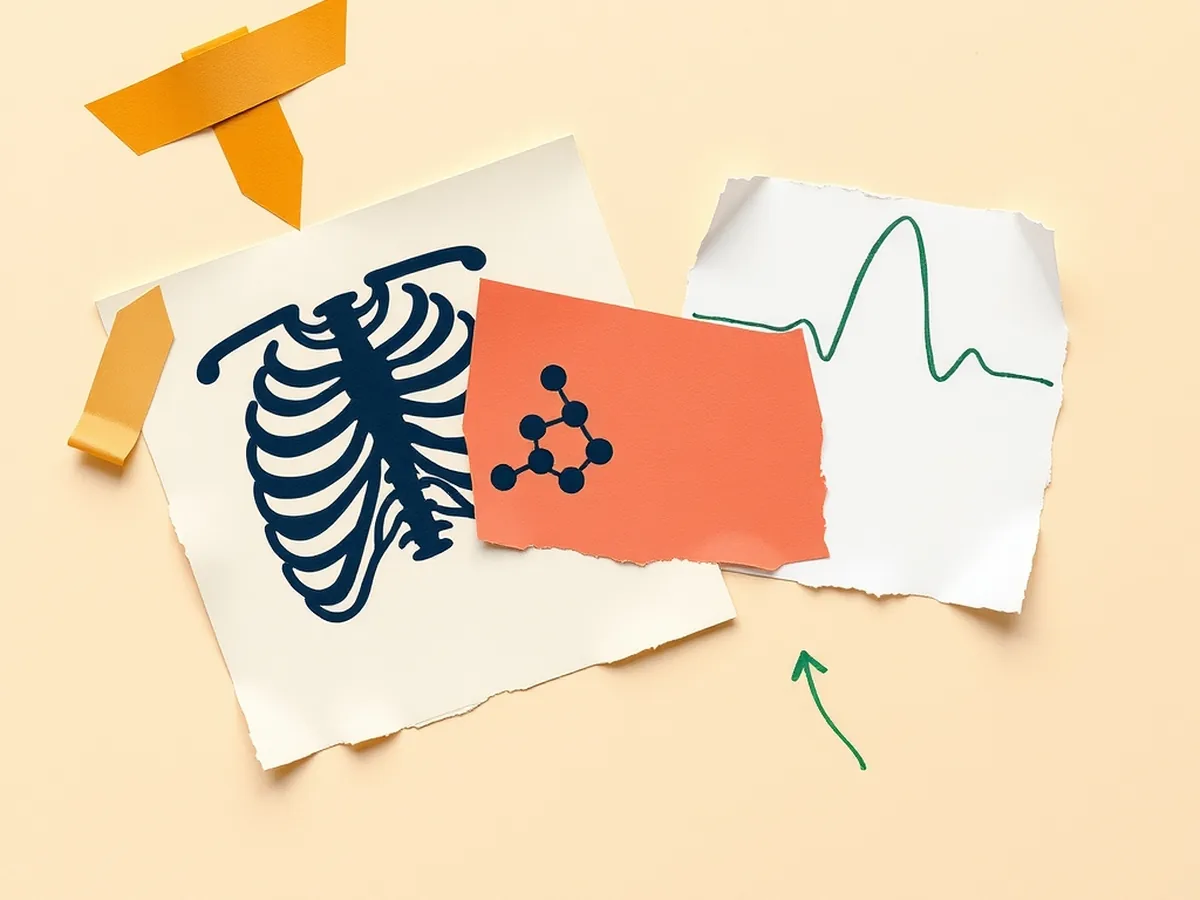
Job 1 — Reading medical images. A radiologist reviewing a chest CT scan may be looking at 300 to 500 image slices per patient, for dozens of patients in a single shift. AI tools trained on millions of labeled scans can flag suspicious regions for the radiologist to examine first. As of March 2026, the FDA has cleared 1,524 AI-enabled medical devices, with roughly 76% in radiology — which tells you where the industry has concentrated its energy. The AI does not replace the radiologist. It changes what the radiologist looks at first.
Job 2 — Drug discovery. Finding a molecule that will behave safely inside a human body is one of the hardest prediction problems in science. Google DeepMind’s AlphaFold predicted the 3D shapes of nearly every known protein — a task that previously took individual research teams years per protein. As of mid-2026, AlphaFold-derived structural data is actively informing clinical trial design across multiple disease areas. The AI does not invent the drug. It narrows the haystack of candidates researchers have to test.
Job 3 — Triage and flagging. Hospital systems use AI to scan incoming patient data and flag cases that may deteriorate — sepsis risk, deteriorating vitals, medication interaction alerts. These are decision-support tools, not decision-making tools. A human clinician makes every call.
All three jobs share a common thread that connects directly to AI4K12 Big Idea #1 — Perception: machines sense the world through data inputs (imaging sensors, lab values, patient records), and everything they “know” about a patient is filtered through what those sensors can capture and what labels humans assigned to the training examples.
How does AI read an X-ray?
The short answer: it learned by looking at millions of labeled examples, the same way a student learns to recognize a cell under a microscope by examining hundreds of slides.
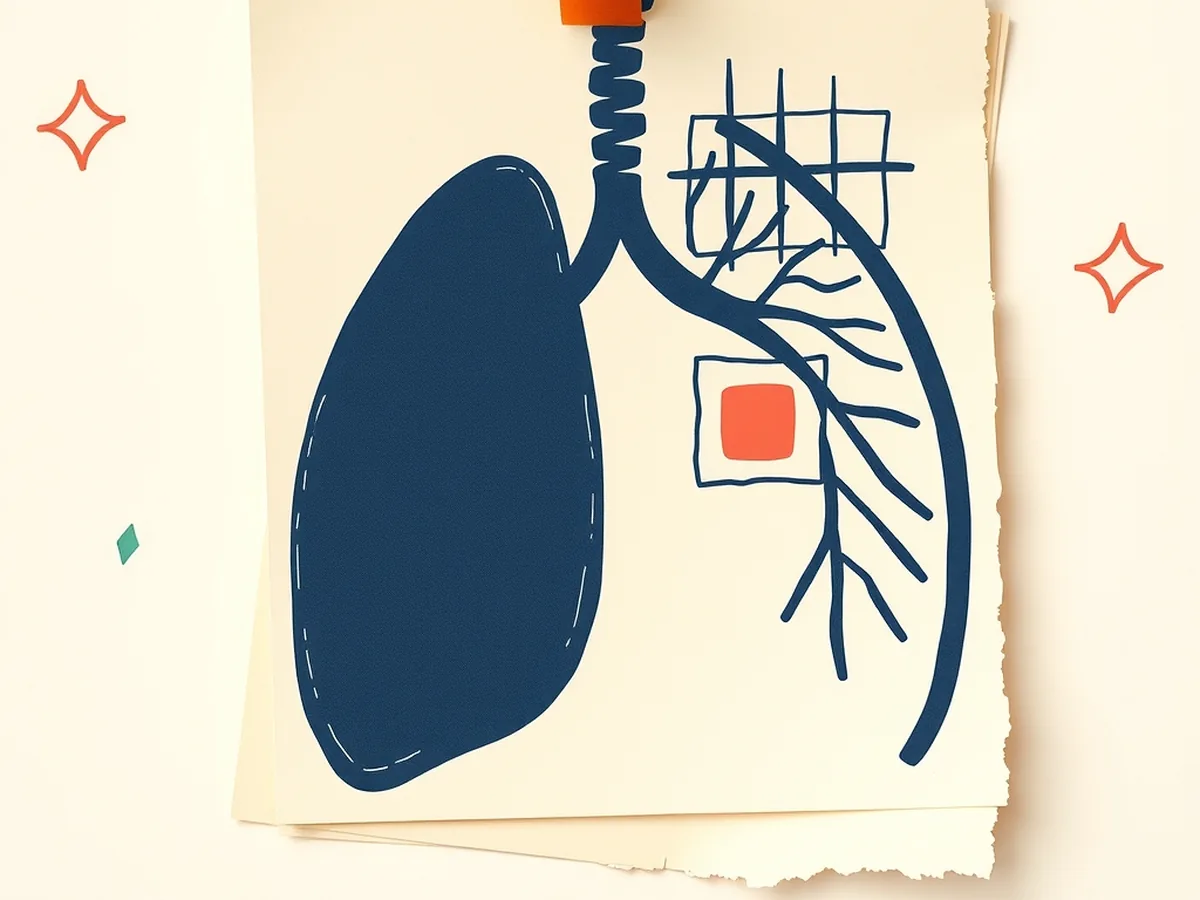
When an AI model is trained to detect pneumonia in chest X-rays, engineers feed it tens of thousands of images — each one labeled by a physician as “pneumonia present” or “pneumonia absent.” The model adjusts its internal weights until it can predict that label on images it hasn’t seen before, with high accuracy. It is not following a rule like “pneumonia looks like X.” It is detecting statistical patterns across pixel regions that correlate with the label. Students who have done any image-classification activity — sorting pictures into categories — already understand the core mechanic. The AI does that sorting at a scale of millions of examples, with sensitivity to patterns human vision misses.
That’s what makes it genuinely useful — and also what makes the next section critical. Every pattern the AI found exists only in the data it was trained on. If that data has a gap, the model has the same gap, invisibly.
This is exactly where ISTE 1.3.d (build knowledge by actively exploring real-world issues and pursuing active investigation) earns its place in a science classroom: students aren’t abstractly studying AI, they’re investigating a live, consequential system.
Where does AI in medicine go wrong?
The bias section is not a hypothetical. Each example below is documented and citable, and every one belongs in your classroom.
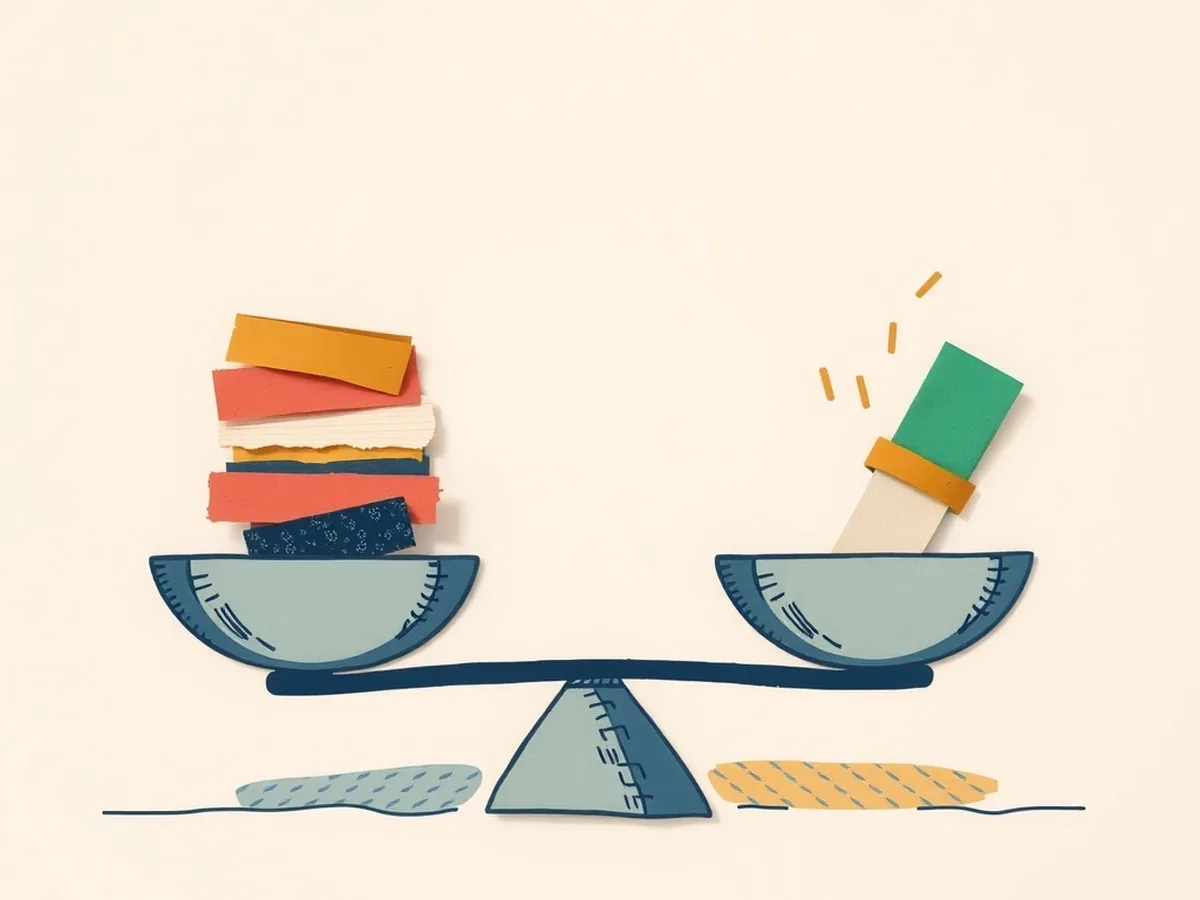
The dermatology dataset problem. AI tools for detecting skin cancer were trained largely on images of lighter-skin patients. A 2025 study found that dermatology AI training datasets contain fewer than 5% images of dark-skin tones, and GPT-4o showed lower melanoma sensitivity for Fitzpatrick skin types III–VI — the types most underrepresented in training data. An AI that performs at 94% accuracy overall can be performing at a substantially lower rate for the patients most likely to be missed.
The pulse oximeter problem. Before you can teach AI bias in medicine, it helps to show students that medical device bias predates AI. Pulse oximeters — the clip-on fingertip sensors used in every clinic and hospital — measure blood oxygen by shining light through the fingertip and detecting absorption. A 2021 study in the New England Journal of Medicine found the devices overestimated blood oxygen in darker-skinned patients, meaning some patients were quietly under-treated for oxygen deficiency. This is sensor bias — the kind AI4K12 Big Idea #1 (Perception) directly addresses — and it explains why an AI trained on pulse-oximeter readings inherits the same systematic error.
IBM Watson for Oncology (historical anchor). Between 2013 and roughly 2022, IBM’s Watson for Oncology was sold to hospitals as an AI system for recommending cancer treatments. Internal documents later reviewed by reporters and researchers showed that in some cases the system recommended treatments clinicians considered unsafe or at odds with standard-of-care guidelines. An analysis from the Johns Hopkins Armstrong Institute documents both the promise and the failure modes of AI diagnostic tools in this period. Watson for Oncology was eventually discontinued. Use this as the historical anchor — the cautionary case where a system was deployed before its limitations were understood.
These three examples map to AI4K12 Big Idea #3 (Learning — how training data shapes what a model can and cannot see) and AI4K12 Big Idea #5 (Societal Impact — whose health outcomes are affected when a model generalizes poorly). For the bias-auditing skill students need to interrogate any AI system, the station rotation in our grade 8 AI bias activity gives students five worked examples to examine themselves.
A 50-minute AI in healthcare lesson plan
This runs as a standalone period in a science, health, or AI literacy class. No devices required except the projector. Printables noted below.
| Time | Activity | What students do |
|---|---|---|
| 0–8 min | Warm-up: Project an X-ray. Show a chest X-ray (public-domain from NIH) and ask: “What do you notice? What would make this hard to read?” Students pair-share. Do not reveal the diagnosis yet. | Observe, notice, wonder |
| 8–20 min | Mini-lesson: Three jobs AI does in medicine. Walk through the three jobs (reading images, drug discovery, triage). Drop the FDA 1,524-device stat on the board. Ask: “Why do you think 76% of them are for radiology?” | Listen, discuss, annotate notes |
| 20–38 min | Bias case-study station. Students read a one-page brief on the dermatology AI finding, then answer the discussion question in writing before talking to a partner. Write for 4 minutes, discuss for 4, then share one question with the class. The goal is not a verdict — it’s the habit of asking the right questions. | Write → pair → share; CCSS.ELA-LITERACY.W.7.8 evidence-gathering |
| 38–48 min | Four-corners debate: “Should a hospital use an AI that’s 95% accurate but performs worse for some patient groups?” Corners: Strongly Yes / Leaning Yes / Leaning No / Strongly No. Students move, discuss with their corner, then the teacher cold-calls one speaker per corner. Ask: “What would have to be true for you to switch corners?” | Argue a position with evidence, weigh counterarguments |
| 48–50 min | Exit ticket. One sentence: “The most important question a patient should ask before an AI is used in their care is ____________ because ____________.” | Synthesize; connects to ISTE 1.2.b |
The worked discussion question, written out. For the bias case-study station, here is the exact text to print or project:
A new AI tool for detecting skin cancer was trained on a dataset that is 5% dark-skin images and 95% lighter-skin images. In testing, it achieved 94% overall accuracy. A hospital in your city is considering deploying it. A patient advocacy group has raised concerns.
Write 2–3 questions you would want answered before recommending that a hospital adopt this tool. For each question, explain why the answer matters. Use at least one piece of evidence from today’s lesson.
This prompt hits CCSS.ELA-LITERACY.W.7.8 (gather relevant information from multiple sources and integrate it into writing while avoiding plagiarism) and forces students to do the one thing we want: move from “AI is biased” as a slogan to “here are the specific questions bias raises in a specific context.”
Standards crosswalk
| Lesson phase | Standard | Code |
|---|---|---|
| Warm-up (X-ray observation) | NGSS — Engineering Design, define the problem | MS-ETS1-1 |
| Mini-lesson (Three jobs) | AI4K12 Big Idea #1 — Perception | Machines perceive the world through sensors and labeled data |
| Mini-lesson (Three jobs) | ISTE — Knowledge Constructor | ISTE 1.3.d: build knowledge by exploring real-world issues |
| Bias case study (dermatology station) | AI4K12 Big Idea #3 — Learning | Training data shapes what the model can and cannot see |
| Bias case study (discussion question) | CCSS ELA — Research writing | CCSS.ELA-LITERACY.W.7.8: gather + integrate evidence |
| Four-corners debate | AI4K12 Big Idea #5 — Societal Impact | AI outcomes differ across groups; identify who is affected |
| Four-corners debate | ISTE — Global Collaborator | ISTE 1.7.b: examine issues from multiple viewpoints |
| Exit ticket | ISTE — Digital Citizen | ISTE 1.2.b: advocate for rights and access |
Bonus standard (prose). NGSS MS-ETS1-1 (define the criteria and constraints of a design problem) can run quietly underneath the four-corners debate: students are, in effect, defining the criteria a fair AI deployment would have to meet. That framing gives science teachers a legitimate NGSS peg without forcing it.
Standards source: ISTE Student Standards. ISTE is a registered trademark of the International Society for Technology in Education. These resources are not affiliated with or endorsed by ISTE.
Where to take it next
Nobody gave you a curriculum for this. That’s the whole problem — and it’s not yours to solve from scratch. Here are the lesson packs built specifically for the AI-in-medicine angle, ready to print.
The AI & Medicine Discussion Lesson — 4 Case Studies + Debate extends the four-corners debate above into four structured case studies — radiology, drug discovery, dermatology bias, and emergency triage — each with a discussion scaffold and a position-paper prompt. It is the natural next period after this lesson.
The AI & Biology Lesson — How AI Helps Scientists Study Life covers the drug-discovery and protein-folding angle in more depth, with a student-facing explanation of how AlphaFold works and what it means for the future of disease research. Pairs well with a life science unit on genetics or cell biology.
If you’re building a longer science-AI arc, the AI for Science Complete Curriculum — 17 Lessons + Labs includes the healthcare and biology lessons above inside a 17-unit sequence with STEM, climate, and environmental applications.
For the ethics side — specifically the bias-auditing skill — the grade 8 AI bias station activity on this site gives students a printable 45-minute rotation where they examine real AI outputs for cultural, source, and gender bias. The dermatology case in today’s lesson connects directly to Station 1.
Nobody handed you a map for this terrain. The tools exist — you just weren’t told where to look. These are them.
This post was drafted with AI assistance and human-finalized.
Quick questions
AI learns from training data, and if that data does not fairly represent all patients, the system develops blind spots. Dermatology AI tools have been shown to miss melanoma more often in people with darker skin because most training images feature lighter skin tones. When students understand this, they understand why more data alone does not fix bias — the data has to be representative.
Yes. Google DeepMind's AlphaFold predicted the 3D shapes of nearly every known protein — the molecular machines that drugs target. That structural data is now informing real clinical trial design, making it a concrete, traceable example of AI moving from a computer model toward testing in actual patients.
Get the free AI-Proof Assignment Toolkit
10 ways to redesign any assignment so an AI chatbot structurally can't do it — plus a redesign worksheet, a 45-minute lesson, the “Spot AI Work” card, and parent templates. One email, all 5 pieces.
Prefer the full breakdown? See everything inside the toolkit →