How Earthquake Early Warning Systems Use AI
Picture a science teacher in the middle of an earthquake drill — students under desks, someone’s water bottle rolling across the floor — and afterward, the department head stops in the doorway: “Could you work some AI into your natural-hazards unit? We want to hit the ISTE standards this quarter.” No materials. No examples. No curriculum. Just that one sentence. If that situation sounds familiar, it is not because you missed a training or skipped a conference. It is because the tools to teach this well were never handed to you. Earthquake early warning systems are one of the cleanest entry points: real sensors, real machine learning, real stakes, real failure modes — and a free no-device activity you can run before the next drill.
The short answer: Earthquake early warning systems use AI to solve a time problem. The moment a quake starts, sensors detect the first arriving seismic wave, a machine-learning model classifies the signal and estimates magnitude and location in under a second, and an alert fires — all before the stronger, destructive wave arrives. The system does not predict earthquakes. It detects one that has already started and races its warning across the internet faster than shaking travels through rock.
What is an earthquake early warning system?
An earthquake early warning system detects a quake the instant it begins and sends a warning that can arrive before the worst shaking — because data travels at internet speed, and seismic waves travel through rock.
The physics is the key teaching moment. Every earthquake produces two main wave types. P-waves (primary waves) travel at roughly 6 km per second, arrive first, and cause light jolting. S-waves (secondary waves) travel at roughly 4 km per second, arrive second, and carry the energy that topples buildings. Penn State’s seismology notes give a clean explanation of the wave-speed difference your students can read directly.
The gap between those two arrivals — sometimes 10 seconds, sometimes 60 seconds depending on distance — is what the system runs through. The warning races that gap.
One distinction worth writing on the board: this is detection plus warning, not prediction. No system today can tell you tomorrow’s earthquake. What these systems do is detect a quake that has already started and fire a warning while there is still time to act. Students who understand this distinction are already ahead of most adults in the room.
How does AI detect an earthquake before the shaking?
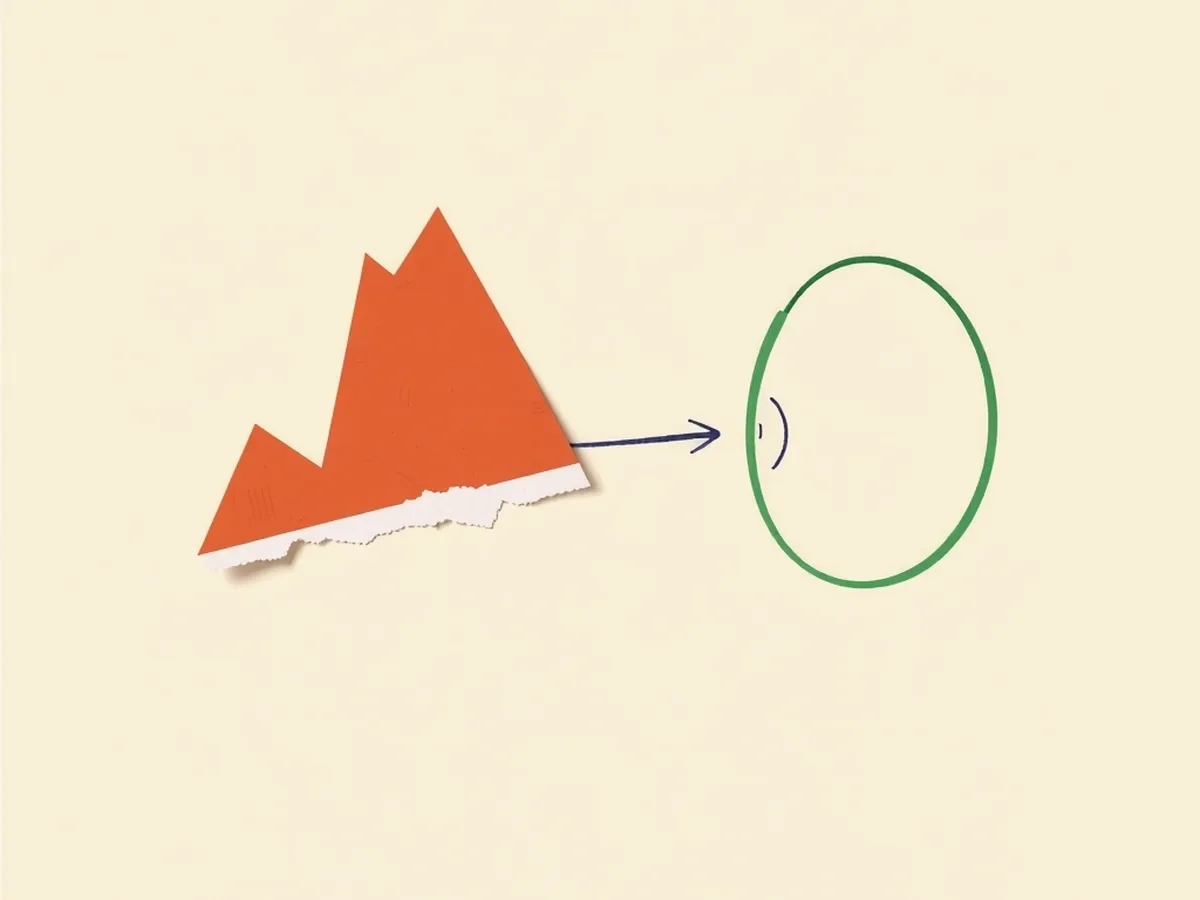
Between a sensor feeling the first tremor and a phone buzzing, a machine-learning step decides “is this a real earthquake, how big, how far?” — and it makes that decision in under a second.
The ML classification layer
The ML classification layer answers one question: does this seismic signal look like a real earthquake, or does it look like noise? Seismic sensors pick up vibrations constantly — trucks rolling past, construction crews, a slammed cafeteria door. A trained classification model pattern-matches the incoming P-wave signature against thousands of labeled examples from past earthquakes. If the signal matches the earthquake pattern, the model estimates magnitude and location. If it does not, it filters the event out before any alert fires.
This is AI4K12 Big Idea #3 (Learning — computers learn patterns from data) in action, and it pairs directly with AI4K12 Big Idea #1 (Perception — computers sense the world through sensors). The sensor array is perception. The classification step is learning. Students can see both working in the same system, in the same second.
One point worth pausing on: the model is only as good as its training data. If the training set is mostly data from one fault type or one region, the model may perform differently on a new fault system it has not seen. That is not a flaw in AI specifically — it is the honest story of how pattern-matching works, and it is the story worth teaching.
How do billions of phones become earthquake sensors?
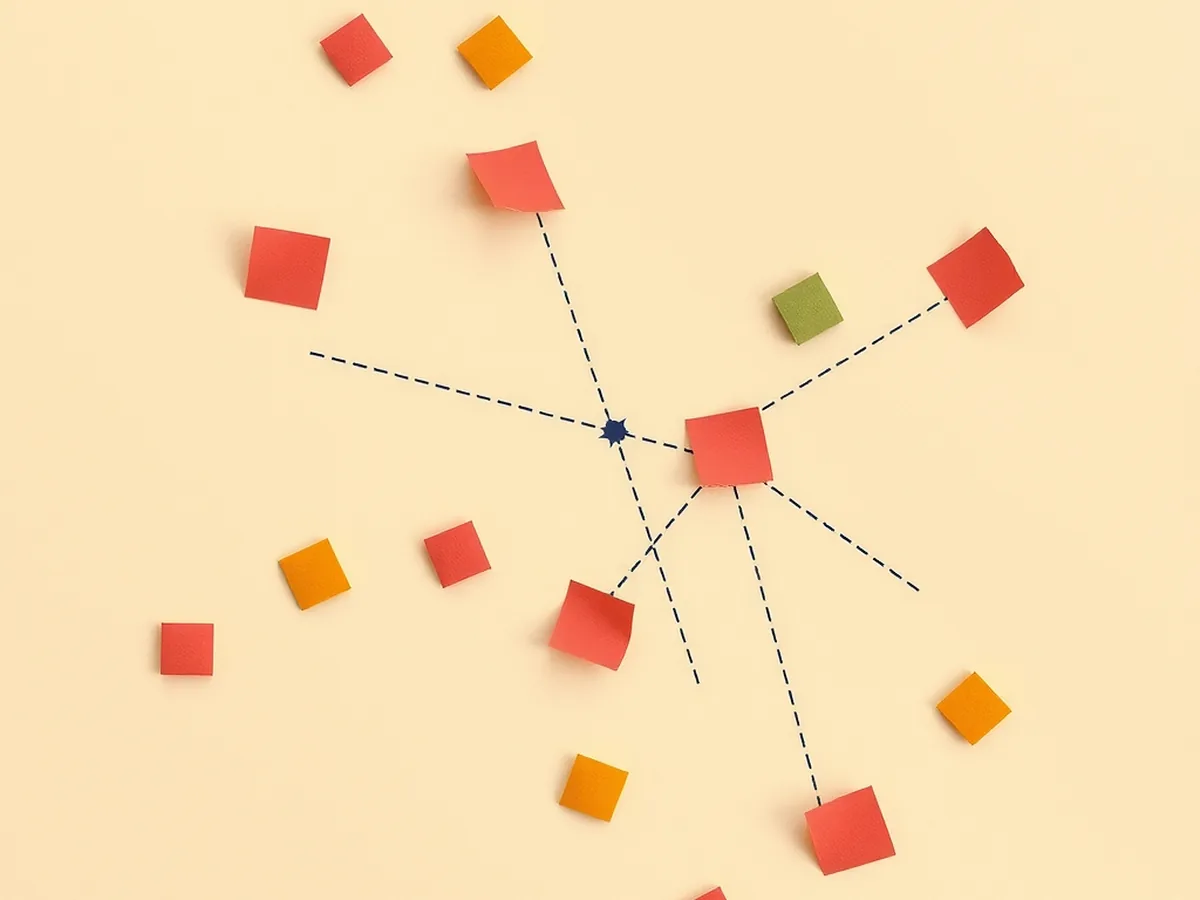
Your phone already has an accelerometer. Google’s Android Earthquake Alerts turns more than two billion of them into a crowdsourced seismometer grid spanning 200+ countries.
Here is how the two major US-facing systems compare:
| ShakeAlert (USGS) | Android Earthquake Alerts (Google) | |
|---|---|---|
| Sensor type | Dedicated seismic sensors | Phone accelerometers |
| Sensor count | ~1,675 dedicated stations (ShakeAlert, US West Coast) | 2+ billion phones |
| Coverage | US West Coast | 200+ countries |
| How it confirms | Processing center + algorithm | Cross-checks a cluster of phones before alerting |
The Android system’s crowdsourcing approach has real peer-reviewed results behind it. A 2025 study by Allen et al. published in Science analyzed the system’s performance from April 2021 through March 2024. During that period it detected 11,231 earthquakes. Roughly 85 percent of those matched traditional seismograph catalogs, and performance was comparable to standard seismometers in matched regions.
That one data point is a classroom discussion waiting to happen. Every phone owner in the room is already part of this network. The device in a student’s pocket is a node in a global earthquake detection grid whether they signed up for it or not. That lands directly on AI4K12 Big Idea #1 — computers perceive the world through sensors — and it opens a worth-having conversation about what it means when your device is the instrument.
If you have already taught navigation apps, students will recognize the structure: phones crowdsourcing real-time data to improve a shared model. The how AI navigation apps predict traffic post in this series covers the same crowdsourcing architecture from a different angle.
Why do early warning systems sometimes get it wrong?
Early warning systems trade perfect accuracy for speed — and the humans who design them set the thresholds. That trade-off is the lesson.
Three honest failure modes worth teaching by name:
The blind zone
The blind zone is the area too close to the epicenter to warn. When the epicenter is directly beneath a sensor cluster, P-waves and S-waves arrive almost simultaneously — there is no gap to run a warning through. USGS documents this as a ~25 km radius around the epicenter where no useful early warning is possible. Students near fault lines — in the Pacific Northwest, in California — live inside potential blind zones. That is not a reason to dismiss the system; it is a reason to still practice drop-cover-hold-on regardless.
False alert: a bad sensor in Nevada
On December 4, 2025, a malfunctioning station caused ShakeAlert to misread a phantom M5.9 earthquake near Carson City, Nevada. USGS reported it as the first false alert since the system began issuing public warnings in October 2019. The problem: bad sensor data was not discarded before the alert chain fired.
False alert: an M9.9 that wasn’t
On October 16, 2026, Japan’s Japan Meteorological Agency issued a false warning for a magnitude 9.9 earthquake. The actual event was roughly M6.9 off Kamchatka. JMA withdrew the warning in 8 minutes and apologized publicly, but bullet trains had already been suspended across large portions of the country.
These three cases together make a genuine classroom discussion question: “The system relies on fast, imperfect data. One bad sensor can wake a city. Is that the right trade-off?” There is no clean answer. That is the point. This maps directly to AI4K12 Big Idea #5 (Societal Impact) and ISTE 1.3.b (evaluate the credibility and accuracy of information — including automated alerts). Students who can articulate the blind zone, the false-positive risk, and the human design choices behind the thresholds are doing exactly what digital citizens need to do.
Nobody handed teachers this discussion framework. The gap was always there. You are not behind — you are working from the first good map of it.
Be the Seismometer Network: a no-device classroom activity

Students become accelerometer “nodes” and discover firsthand why a cluster of confirmed signals is more trustworthy than a single excited one.
A typical group finishes all three rounds in 20-30 minutes. No devices required.
Setup (3 minutes)
Each student holds an index card with one word on it: CALM on the front, SHAKING on the back. Students spread out across the room — they are phone sensors at various distances from an imaginary epicenter. The teacher plays the “central processing server.”
Round 1: one bad node (5 minutes)
The teacher secretly taps one student — near the edge of the room — to flip their card to SHAKING. That student is a truck rumbling past, not an earthquake. The “server” sees one flipped card and must decide: alert or not? When the class discusses, they arrive at the problem themselves: one signal is not enough evidence. A single sensor flipping can mean a truck, a slammed door, faulty hardware. This is why the Android system cross-checks a cluster before firing any alert.
Round 2: the real quake (7 minutes)
This time the teacher triggers a cluster — five to seven students seated near each other — to flip to SHAKING simultaneously. The server sees the cluster, confirms it, and shouts “ALERT” to the far side of the room. Students on the far side have a few seconds to drop-cover-hold-on before the teacher slow-walks across the room as the S-wave, reaching each row in turn. The students near the triggered cluster have less time than the ones far away. Students experience the warning gap physically, not as an abstraction.
Round 3: the blind zone (5 minutes)
The teacher triggers students sitting directly next to the server. The server has no time to shout a warning before the wave (teacher) is already there. Students experience the blind zone: when you are too close to the epicenter, the gap collapses to nothing.
Debrief (5-7 minutes)
Map each round back to the real mechanism. Discussion questions to post:
- Why did Round 1 fail to confirm? (Single-sensor false positive)
- What would you change about the Round 2 thresholds? (Fewer phones needed to confirm = faster but riskier; more phones needed = slower but safer)
- Should the city near the Round 3 epicenter still invest in the network? (Benefits others even when it cannot benefit them)
This is the element no competing lesson page on this topic includes. The activity requires nothing but index cards and floor space — and it produces the felt understanding that makes the physics and the AI stick.
How this maps to your standards
Here is the crosswalk so you can drop this activity into a science, social-studies, or advisory block and document it without rebuilding the wheel.
| Activity step | Standard |
|---|---|
| Wave-type intro + detection vs. prediction | NGSS MS-ESS3-2 — analyze and interpret data on natural hazards to forecast future catastrophic events and inform the development of technologies to mitigate their effects |
| P-wave ML classification (sensor → decision) | AI4K12 Big Idea #1 — Perception (computers sense the world through sensors) |
| Training-data quality discussion | AI4K12 Big Idea #3 — Learning (computers learn patterns from data) |
| False-alert cases + threshold trade-off discussion | AI4K12 Big Idea #5 — Societal Impact (considerations and impacts of AI in society) |
| False-alert evaluation + source-tracing | ISTE 1.3.b — evaluate the accuracy, perspective, credibility, and relevance of information |
| Blind-zone + real-world hazard investigation | ISTE 1.3.d — build knowledge by actively exploring real-world issues and solving authentic problems |
| Phone-as-sensor privacy note (Android network) | ISTE 1.2.d — manage personal data to maintain digital privacy and security |
| Seismometer network activity (collaborative discussion) | CCSS.ELA-LITERACY.SL.7.1 — engage effectively in collaborative discussions on grade-7 topics |
| Post-activity written response or source-gathering | CCSS.ELA-LITERACY.W.7.8 — gather relevant information from multiple sources, assess credibility and accuracy |
Standards source: ISTE Student Standards. ISTE is a registered trademark of ISTE. These resources are not affiliated with or endorsed by ISTE. NGSS is a registered trademark of Achieve. AI4K12 framework: ai4k12.org.
When the department head comes back to check whether you hit the ISTE standards this quarter, that table is your answer. Every column has a code. Every code has an activity step attached.
If you want to pair this unit with a broader natural-hazards AI thread, the how AI predicts weather for middle school post covers a parallel detection-and-prediction system with its own no-device option.
Ready-to-use resources
The gap you were handed — teach AI, no curriculum given — is a real gap. It is not a failing. And it is fillable with materials that already exist.
Three starting points on TPT, matched to where you are this week:
If you want the full conceptual arc — how AI learns, what sensors do, how classification works, where it fails — the How AI Works MEGA: 16 Machine Learning & AI Concept Lessons (Grades 6-12) covers all five AI4K12 Big Ideas across 16 lessons with standards documentation built in.
If no-device activities are your entry point — like the seismometer network activity above — the Unplugged AI Activities: 10 No-Tech Lessons, Card Sort & Role Play (Grades 6-7-8) gives you ten complete offline lessons, including card sorts and role-play formats that work in advisory, science, and ELA.
If you need the conceptual foundation — the difference between narrow AI, general AI, and the fictional superintelligence students think they are talking about — the Types of AI Deep-Dive Lesson: Narrow vs. General vs. Super AI (Grades 6-7-8) is a one-period lesson that resets student assumptions and makes every subsequent AI discussion more accurate.
The materials exist. The curriculum gap has always been the problem, not the teachers working inside it.
This post was drafted with AI assistance and human-finalized.
Quick questions
No. Earthquake early warning systems do not predict earthquakes — they detect one the instant it starts. Sensors pick up the fast, weak P-wave, a machine-learning model confirms it is a real quake, and an alert races ahead of the slower, destructive S-wave. That buys seconds to tens of seconds, not days of notice.
Most smartphones contain a tiny accelerometer that senses motion. Google's Android Earthquake Alerts system watches for a cluster of nearby phones shaking at the same time; if enough of them report the same jolt, servers confirm a quake and send a warning. A 2025 study in Science found the phone network detected 11,231 earthquakes over three years, performing comparably to dedicated seismometers.
Because they trade perfect accuracy for speed, and humans set the thresholds. One malfunctioning sensor can look like a real quake. In December 2025 a bad station triggered a phantom M5.9 alert near Carson City, Nevada; in October 2026 Japan's weather agency issued and withdrew a false M9.9 warning within eight minutes.
Get the free AI-Proof Assignment Toolkit
10 ways to redesign any assignment so an AI chatbot structurally can't do it — plus a redesign worksheet, a 45-minute lesson, the “Spot AI Work” card, and parent templates. One email, all 5 pieces.
Prefer the full breakdown? See everything inside the toolkit →